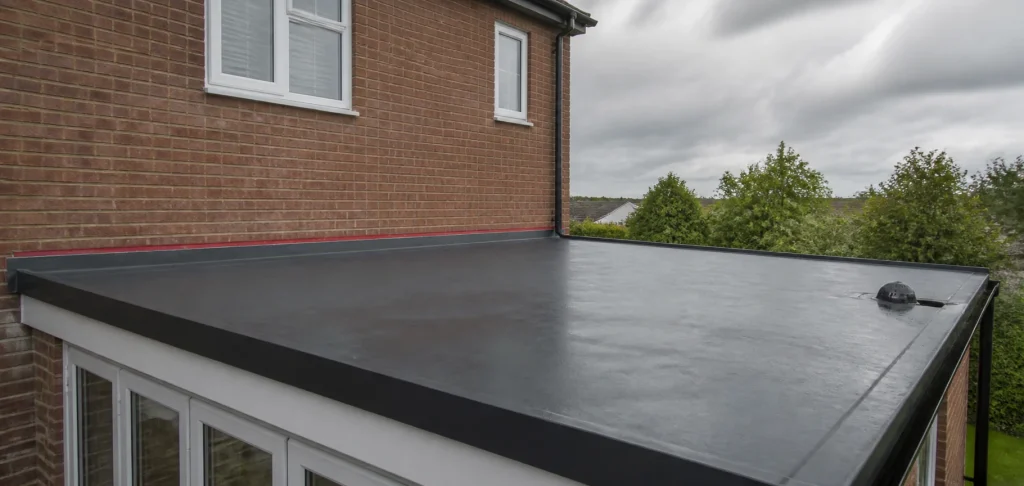
Standing water is one of the clearest signs that a flat roof is not moving rain away as it should. A small puddle after heavy rain is not always a crisis, but water that lingers can point to problems with the fall, outlet position or roof edge detailing.
Good drainage is not an optional extra on a flat roof. It is part of the roof design, the installation quality and the way the roof protects the building below. Understanding the basics helps you judge whether a repair is likely to solve the issue or whether a more complete flat roof installation may be the better answer.
Why flat roofs still need a fall
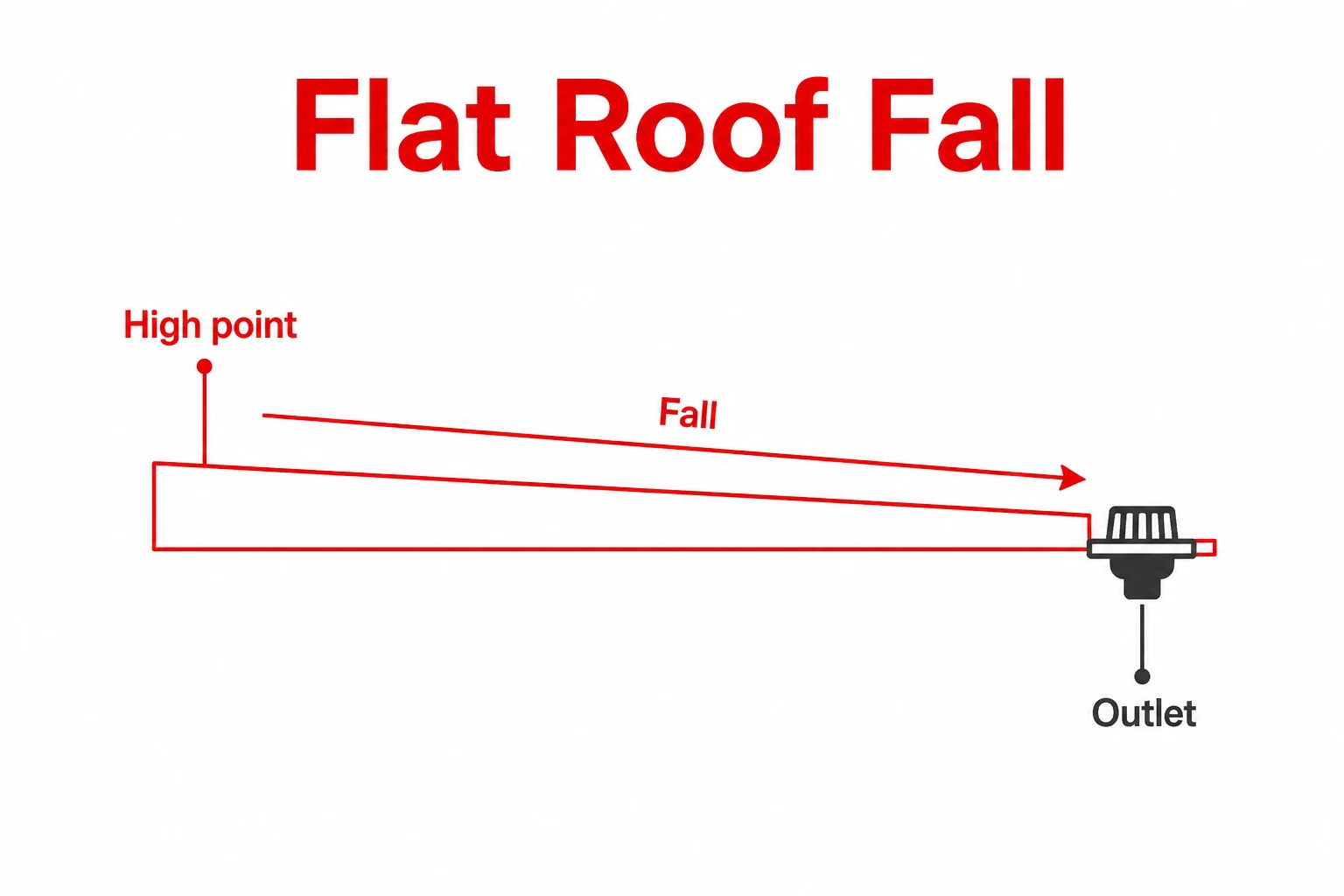
The term flat roof can be misleading. A properly built flat roof should still have a slight fall so rainwater can travel towards an outlet, gutter or drainage edge. The surface may look almost level from the ground, but the structure beneath should guide water in a planned direction.
When the fall is right, rain clears more evenly. The roof covering has less standing water to deal with, outlets are easier to keep working and the edges of the roof are less likely to be overloaded during bad weather. This matters on domestic extensions, garages, dormers and small commercial buildings alike.
Problems often start when the fall is too shallow, uneven or interrupted. A dip in the deck can create a low point where water gathers. Poorly placed insulation, previous patch repairs or movement in the structure can also change how water flows. Over time, the roof may start to hold water in one area even if the original design worked well.
This is why experienced flat roof fitters look beyond the surface covering. The membrane, felt or liquid system matters, but so does what it is laid onto. A neat finish on top cannot fully compensate for a roof deck that sends water the wrong way.
What standing water can do over time
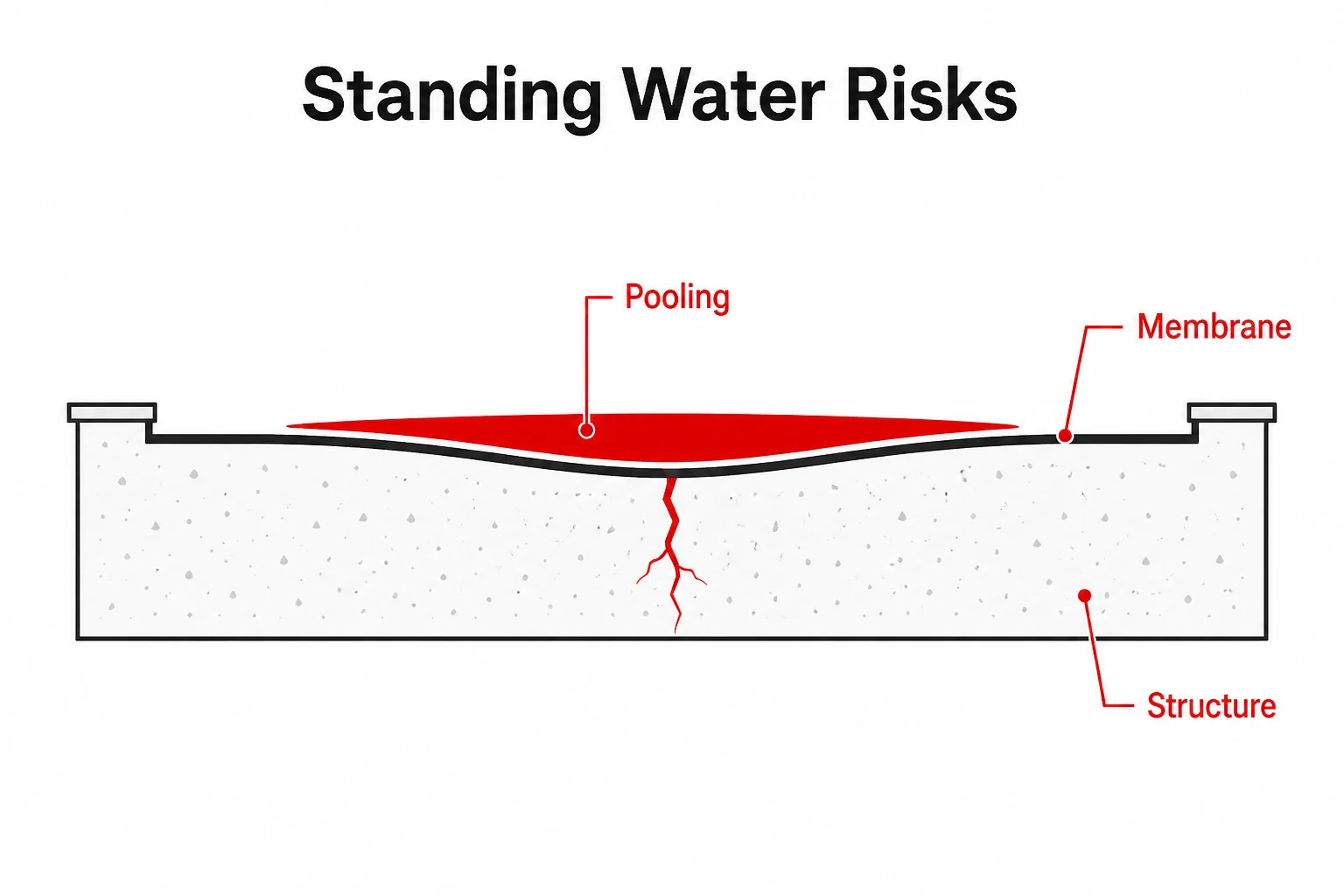
Standing water adds weight to the roof and keeps the surface wetter for longer than intended. Many modern flat roof systems are designed to resist weather, but they still perform best when rain drains away efficiently. Water that remains in the same place can expose weak details sooner than expected.
The most common concerns include extra strain around seams, joints and upstands. Dirt and leaves can settle in puddles, creating a damp layer that slows drying even further. In cold weather, trapped water can freeze and expand, which may worsen small weaknesses in the surface or around details.
Standing water can also hide early warning signs. A small split, blocked outlet or lifted edge detail may be difficult to spot while the area is covered. Once water finds a route beneath the roof covering, damp marks inside the building may appear some distance from the actual fault.
Not every puddle means the whole roof has failed. A little residual water after rainfall can be normal on some systems, especially before the surface has had time to dry. The concern is water that stays for long periods, grows in size, appears around joints or keeps returning to the same sagging area.
The role of outlets, gutters and roof edges
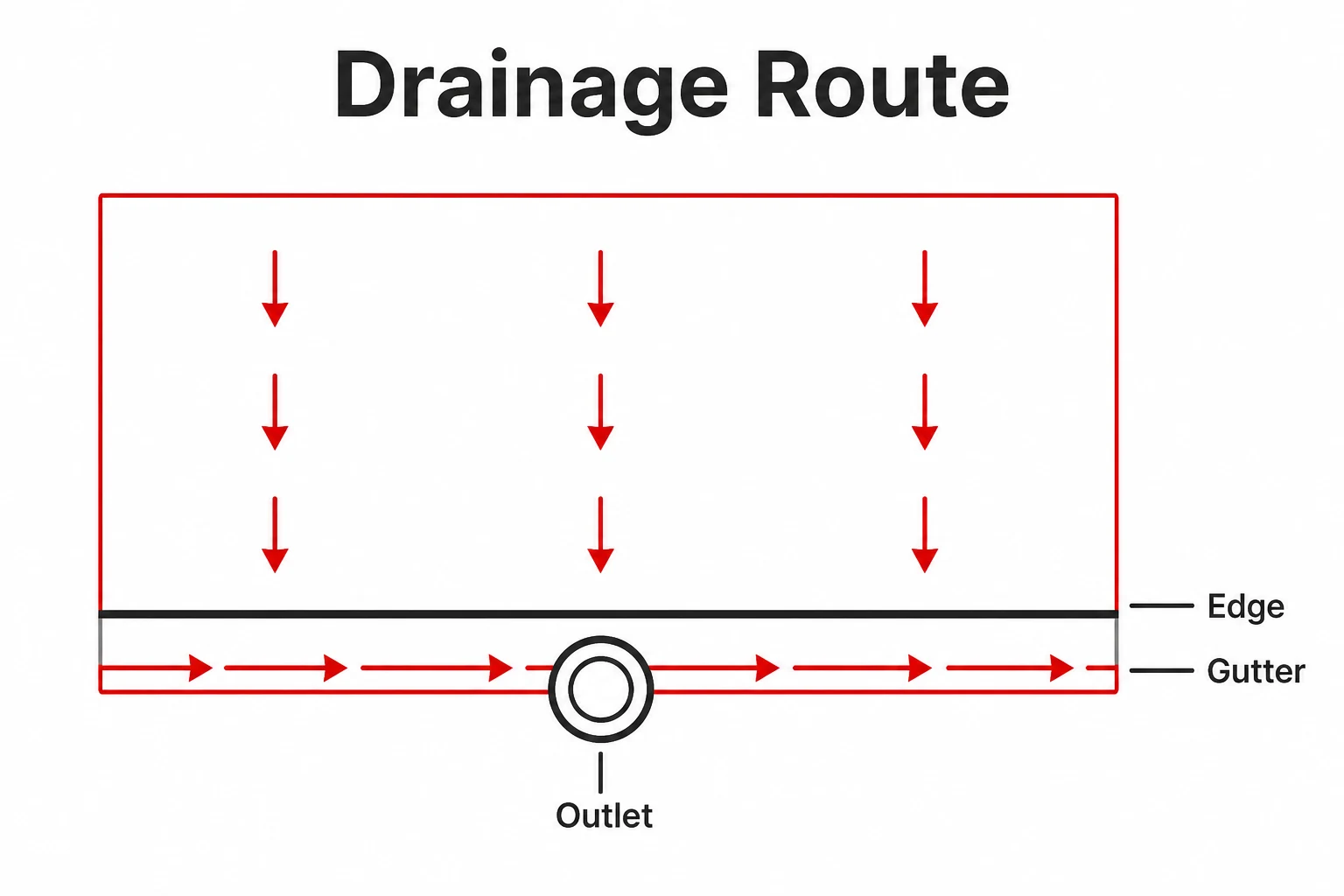
Falls only work if the water has somewhere clear to go. Outlets, gutters and edges are the parts of the roof that complete the drainage route. If they are undersized, blocked, poorly detailed or set too high, water can gather even where the main roof surface has a suitable fall.
On many flat roofs, water is directed towards an outlet through a parapet or into a gutter along the roof edge. The detail around that point has to be carefully formed because it is a natural pressure point during heavy rain. If the outlet sits above the roof surface, water may pool around it instead of draining through it.
Gutters and fascias matter too. A roof may be shedding water correctly, but if the receiving gutter is cracked, loose or blocked, water can back up against the roof edge. That can lead to staining, damp roofline timbers and repeated problems that look like a roof covering issue. Where roofline condition is part of the problem, it can be useful to understand the wider role of soffits, fascias and rainwater goods.
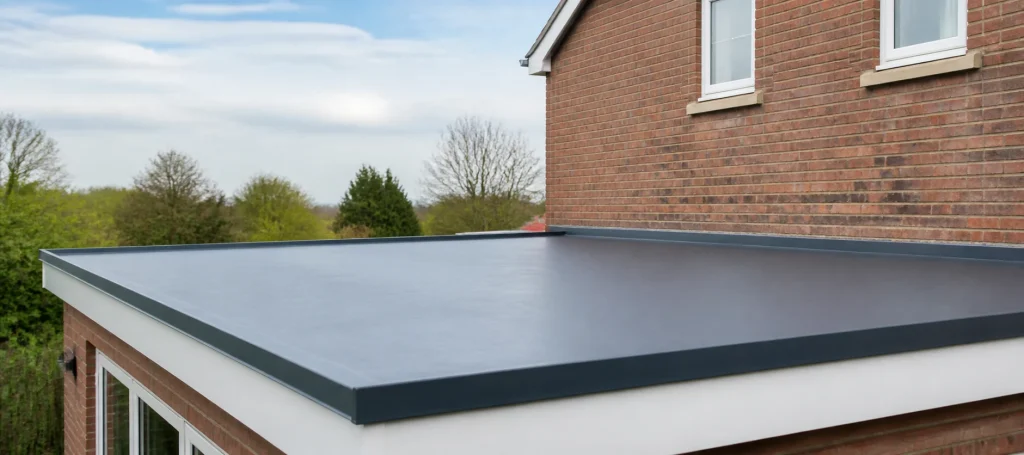
Edge trims, kerbs and upstands also need care. They stop water tracking into the building at vulnerable junctions. A poor edge detail can allow wind driven rain to get beneath the covering or can create a lip that traps water on the roof. Good flat roof drainage is therefore a combination of slope, outlet position and edge workmanship.
Repair or replacement, what should be checked
When a flat roof is holding water, the first step is to work out why. A blocked outlet is a very different problem from a deck that has dropped. A surface blister is different from a poorly designed drainage route. The right solution depends on the cause, not just the symptom.
A roofer will usually check how long the water remains after rain, where it gathers and whether there are visible low spots. They may also inspect outlets, gutters, flashings, edge trims and internal signs of damp. If water is entering the building, the route may not be directly below the puddle, so a careful inspection matters.
Repair can be suitable when the roof covering is otherwise sound and the issue is local. Examples might include clearing or improving an outlet, correcting a small edge defect, repairing a damaged section or resolving a gutter fault. In these cases, the aim is to restore the drainage path and protect the existing roof system.
A more complete installation may be sensible when the roof has widespread ponding, an ageing surface, repeated leaks or a deck that no longer supports proper falls. In that situation, fitting a new system gives the opportunity to correct the build up, improve drainage and detail the edges properly. Alliance Roofing explains its approach to flat rubber roof installation and repair for readers comparing options.
Drainage details that show quality workmanship
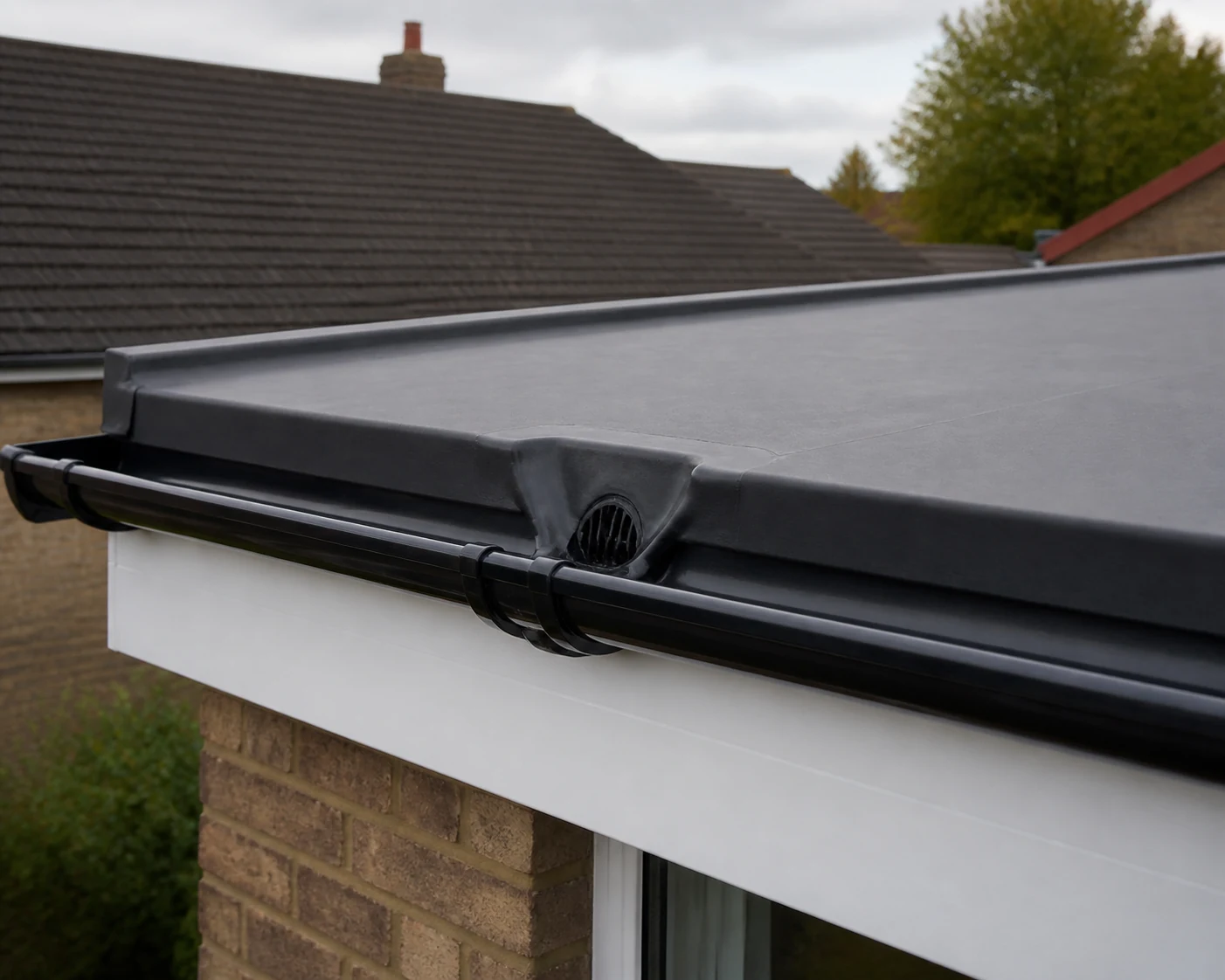
A good flat roof should make sense when you look at how the water is expected to move. The surface should not rely on luck. There should be a clear route from the highest point to the drainage point, with no awkward lips, trapped corners or raised details in the way.
Quality workmanship is often visible in the small details. The roof covering should be neatly dressed into outlets. Upstands should be high enough and properly sealed. Corners should be formed cleanly. Edge trims should look secure and consistent. Gutters should sit where they can actually receive water from the roof.
Materials also need to suit the roof. Flat roof membranes, felt systems and other coverings can all perform well when installed correctly, but each system depends on the preparation beneath it. A roof deck that is firm, clean and correctly formed gives the covering a much better foundation.
Ventilation and moisture control can matter in the wider roof build up too. If warm air becomes trapped and condensation forms within the structure, damp problems can be confused with leaks from rainwater. For background on that side of roof performance, Alliance Roofing has a useful guide to why roof ventilation matters.
How property owners can reduce drainage problems
Flat roof drainage is mainly created by design and installation, but regular checks help keep it working. After heavy rain, it is worth noticing whether water clears or sits in the same area for a long time. Repeated ponding is a sign that the roof deserves closer attention.
Keep outlets and gutters clear where they can be accessed safely. Leaves, moss and general debris can quickly restrict drainage. Never take risks with ladders or roof access, especially in wet or windy conditions. If the outlet cannot be reached safely from the ground, arrange for a roofer to inspect it.
Watch for warning signs inside as well as outside. Damp patches, staining, mould near the ceiling line or a musty smell can suggest water is getting into the roof build up. External clues can include sagging areas, loose trims, cracks around details or overflowing gutters.
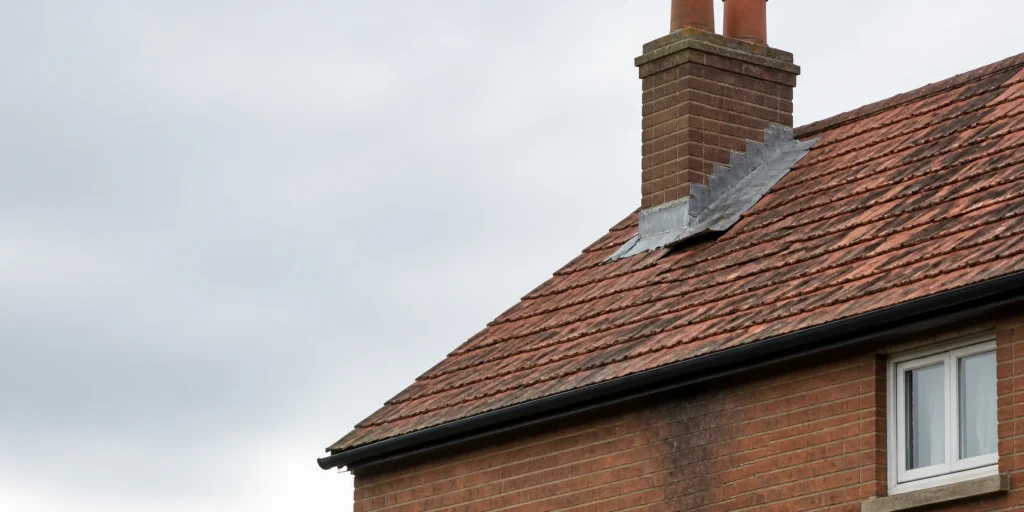
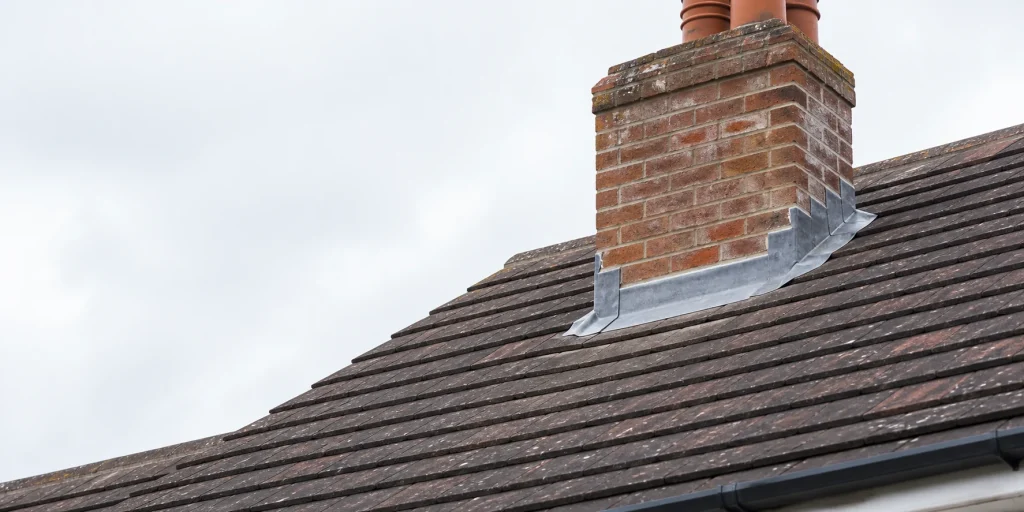
It is also worth checking nearby roof features. Chimneys, abutments and junctions can affect how water moves around a roof, especially where pitched and flat sections meet. If there are signs of deterioration around masonry or flashings, advice on timely chimney maintenance may help explain why those details should not be ignored.
- A flat roof should still have a planned fall so rainwater can drain away.
- Standing water may point to low spots, blocked outlets, poor edge detailing or ageing materials.
- Outlets, gutters, fascias and trims are all part of the drainage system.
- Repair can work for local faults, while replacement can correct wider problems with falls and structure.
- Regular checks after heavy rain help spot drainage issues before they become more serious.
Frequently asked questions
Is any standing water normal on a flat roof?
A small amount of water shortly after rain can be normal, especially while the roof surface dries. Water that remains for a long time, gathers in deep areas or keeps returning to the same place should be inspected.
Can blocked gutters cause ponding on a flat roof?
Yes. If gutters or outlets cannot take water away, rain can back up at the roof edge or around the drainage point. Clearing the blockage may solve the issue if the roof surface and detailing are otherwise sound.
Does ponding mean I need a new flat roof?
Not always. The cause needs to be checked first. A local outlet or trim problem may be repairable, but widespread ponding, repeated leaks or a sagging deck may point towards a new installation.
What should flat roof fitters check before installing a new system?
They should assess the deck, falls, outlet positions, edge details, upstands, gutters and any nearby junctions. The roof covering is only one part of a reliable drainage design.
Need a flat roof checked?
If standing water is worrying you, Alliance Roofing can inspect the roof, explain what is causing it and recommend a practical repair or installation option.