A commercial flat roof has to do more than keep rain out. It also has a major role in controlling heat loss, managing moisture and keeping the building comfortable through changing weather.
Single ply roofing can support better roof insulation when it is designed as part of the full roof build up. The membrane, insulation, vapour control layer, deck condition and detailing all need to work together, which is where professional installation makes a real difference.
Why the roof build up matters
Single ply roofing is often talked about as the visible waterproofing layer, but its performance depends on everything beneath and around it. A well planned flat roof system is built in layers. Each layer has a job, and the finished roof is only as reliable as the way those layers are specified and installed.
On a typical commercial flat roof, the build up may include the structural deck, a vapour control layer, insulation boards, fixings or adhesive, cover boards where required, and the single ply membrane. The exact arrangement depends on the building, the condition of the existing roof, drainage falls, expected foot traffic and the required thermal performance.
Insulation works best when it is continuous, secure and protected from moisture. If gaps are left between boards, if boards are poorly fitted around penetrations, or if moisture is trapped within the system, the roof can lose efficiency. Heat can escape through weak points and condensation risk can increase within the roof structure.
Single ply can be a strong choice because it sits neatly over modern insulation systems and can be detailed around outlets, upstands, rooflights and plant penetrations. For building owners comparing options, Alliance Roofing explains the service in more detail on its single ply roofing systems page.
How single ply membranes protect the insulation layer
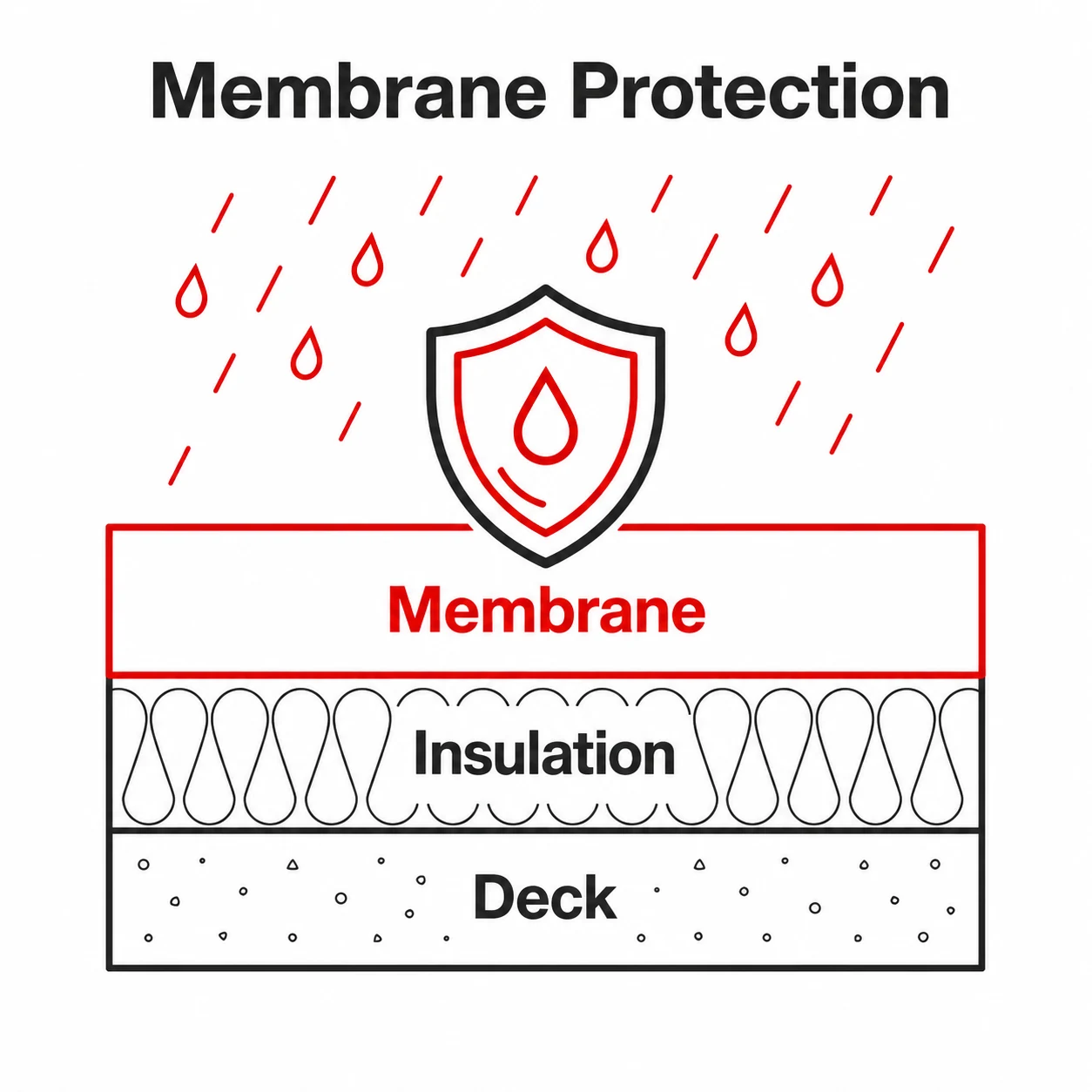
The membrane is the outer weathering layer, so it plays a direct role in keeping the insulation dry. Insulation materials are chosen for thermal performance, but they need proper protection. Once water gets into a flat roof build up, the insulation can become less effective and the roof may need more involved remedial work.
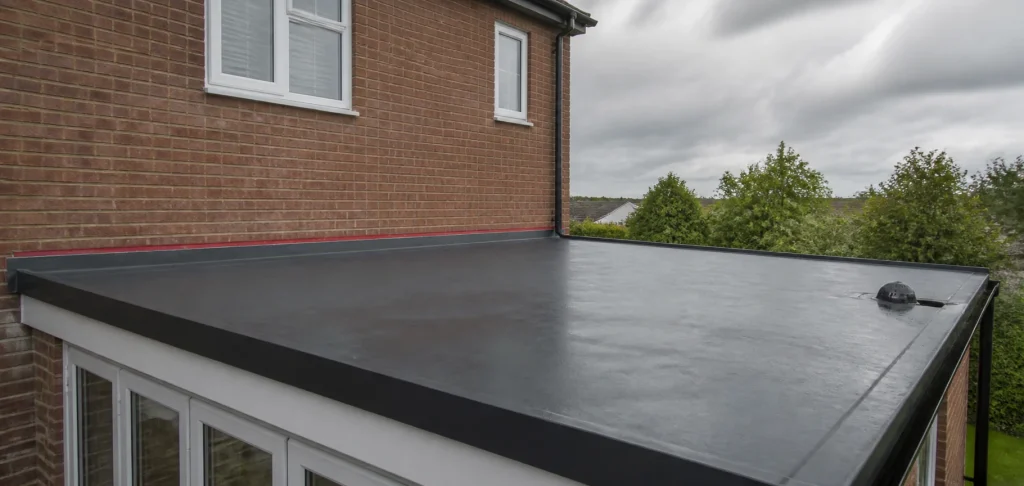
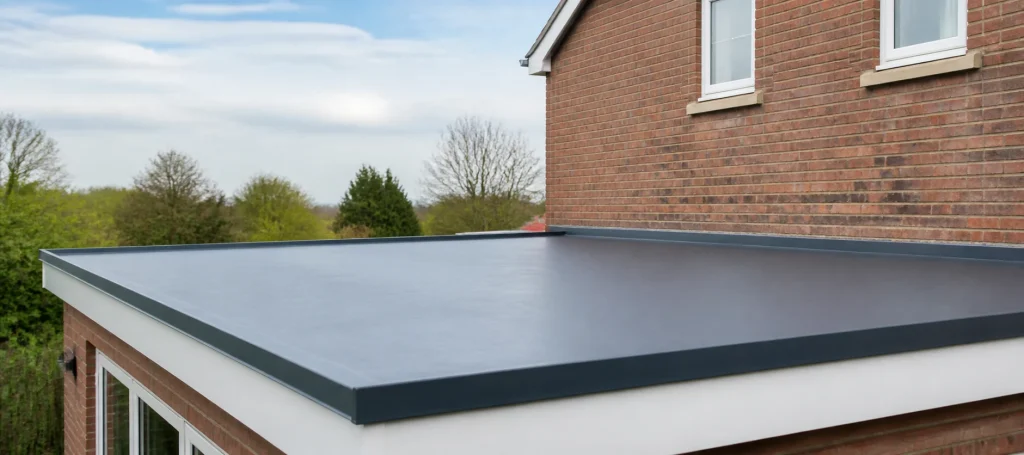
A correctly installed single ply membrane provides a continuous waterproof covering over the insulated roof area. It is usually supplied in sheets, then joined using the method specified for that material. The quality of those joints matters because seams, edges and details are the areas most likely to be tested by standing water, wind uplift and regular weather exposure.
Membrane choice should not be treated as a simple product preference. Different single ply systems have different fixing methods, compatibility requirements and detailing rules. The right choice depends on the roof deck, the insulation type, the shape of the roof, access needs and how the building is used.
A professional contractor will consider how the membrane and insulation interact. For example, some systems are mechanically fixed, while others are adhered or ballasted where suitable. Each approach affects how the insulation is secured, how the roof handles wind forces, and how penetrations and perimeters are finished.
Single ply is not the only flat roof option, so it is sensible to understand the wider choices too. If you are comparing membrane types, Alliance Roofing also covers flat rubber roof systems, which can help you weigh up the most suitable specification for the building.
Insulation layers and thermal performance
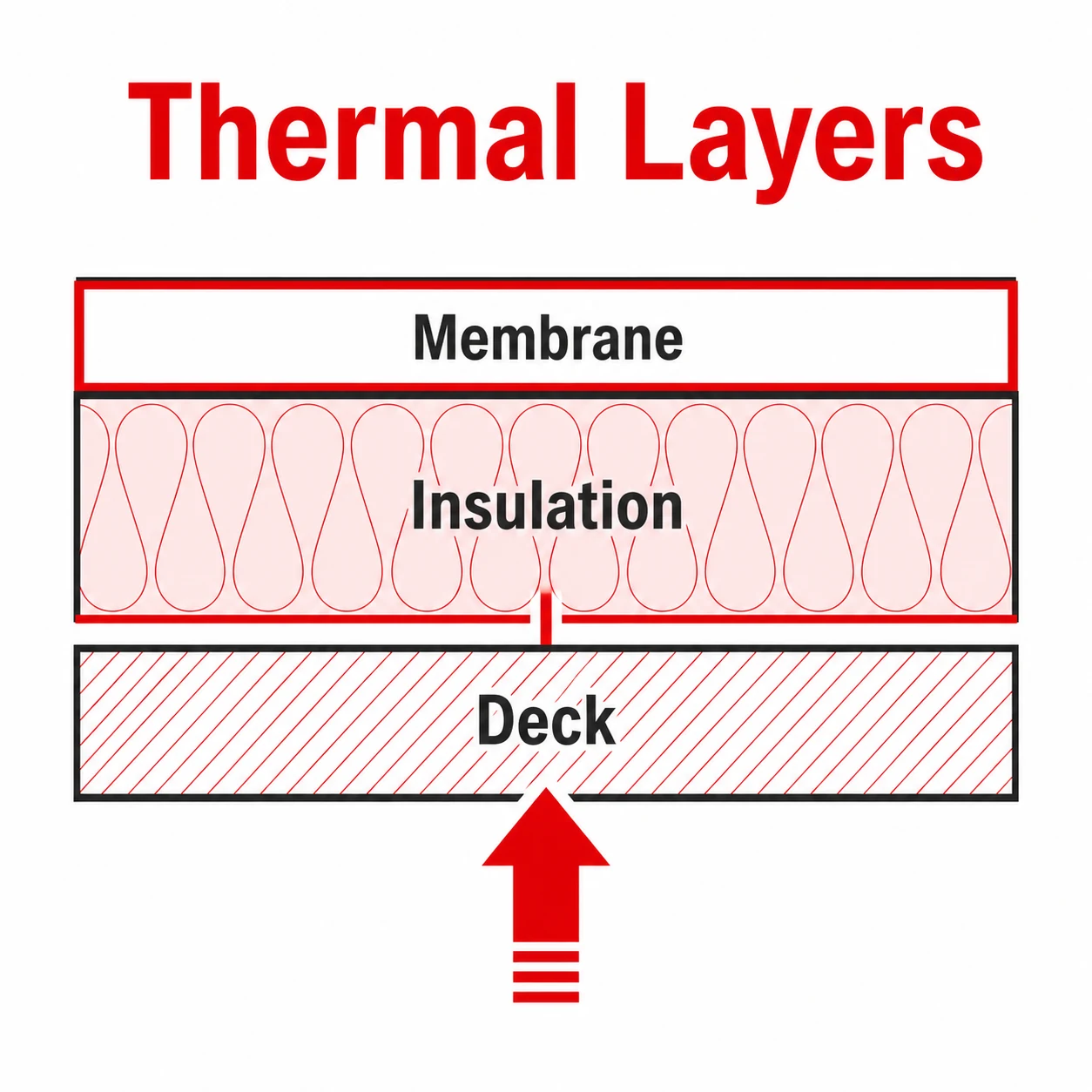
Better roof insulation is not achieved by the membrane alone. The insulation layer must be designed to suit the building and installed with care. For many commercial flat roofs, a warm roof build up is used, where insulation sits above the deck and beneath the waterproofing layer. This keeps the deck closer to the internal temperature and can help reduce condensation risk when the roof is correctly specified.
Insulation boards need to be laid tightly, with staggered joints where required by the system design. Junctions at parapets, kerbs, rooflights and service penetrations need careful treatment because they are common places for thermal bridging. A roof can have good insulation across the main open area, yet still underperform if edges and details are not handled properly.
The thickness and type of insulation should be selected by reference to the building use and the required performance standard. A contractor should not simply copy the previous roof build up if it no longer suits the property. Refurbishment is often a useful opportunity to improve the thermal layer while the waterproofing is being renewed.
Drainage also affects insulation performance. Flat roofs still need falls, outlets and clear water paths. If water sits for prolonged periods, it places more demand on the waterproofing and details. Good design considers where water will travel, how outlets will be formed, and whether the insulation layout needs tapered boards to help create falls.
The role of vapour control and ventilation
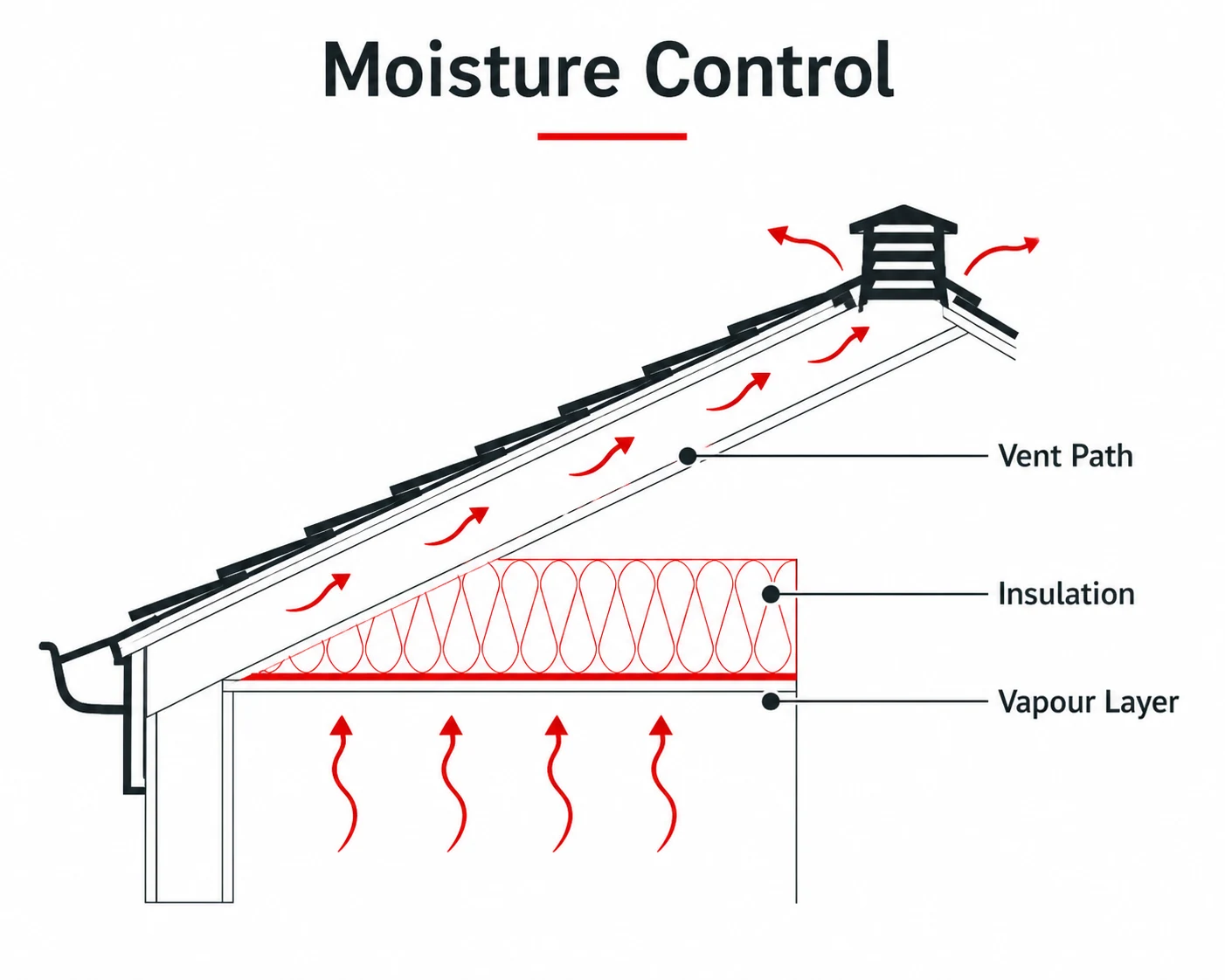
Moisture control is one of the most important parts of an insulated flat roof. Warm air from inside a building can carry moisture. If that moisture reaches a cold part of the roof build up and condenses, it can affect insulation, finishes and structural elements.
A vapour control layer helps manage that risk by limiting the movement of warm, moist air into the roof system. It must be compatible with the roof design and carefully sealed at laps, edges and penetrations. Small gaps in a vapour control layer can undermine the wider roof build up, especially around pipework, rooflights and changes in level.
Ventilation should also be understood in context. Some roof designs rely on ventilation, while warm roof systems are usually designed so that ventilation within the roof void is not the main control method. The key point is that insulation, vapour control and ventilation should never be guessed. They need to suit the roof type and the building conditions.
For a broader look at how airflow and moisture affect insulation, the guide to roof ventilation and insulation issues is a useful companion article.
Why correct installation protects long term performance
The best specification can still fail to deliver if the installation is rushed or poorly coordinated. Single ply roofing depends on preparation, clean surfaces, correct fixing patterns, accurate welding or bonding, and careful finishing at details. These are practical site skills as much as design decisions.
Before installation, the existing roof should be assessed. The contractor needs to understand the deck condition, any trapped moisture, drainage problems, previous repairs and the suitability of the substrate. Covering over unresolved defects can reduce the value of the new system.
During the work, insulation boards should be kept dry and installed according to the chosen system. Fixings need to suit the deck and the design requirements. The membrane should be laid without unnecessary tension, joined correctly and checked at laps, corners and outlets. Upstands should be taken to the required height for the detail, and terminations should be secure.
Quality at roof edges is particularly important. Perimeters face wind pressure, movement and weather exposure. Poor edge detailing can allow water entry and can place stress on the membrane. A good installation deals with those areas deliberately, rather than treating them as finishing touches.
This is also why experienced single ply roofing contractors are valuable on commercial flat roof projects. The roof has to work as a complete system, not just as a surface covering.
When upgrading an existing flat roof makes sense
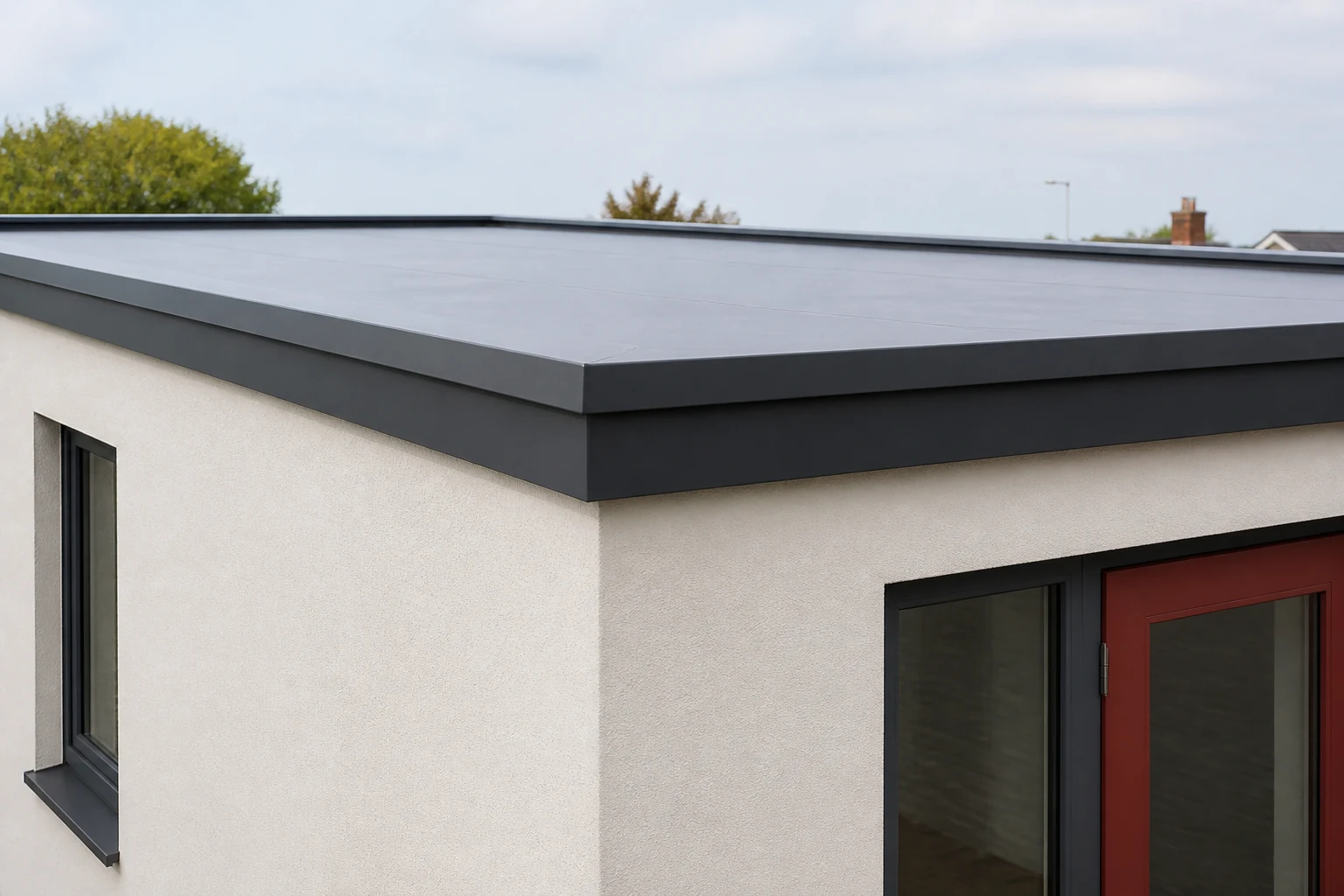
An insulation upgrade is often considered when a flat roof is already due for refurbishment, when internal comfort is poor, or when a building owner wants to improve the roof as part of planned maintenance. If the waterproofing is ageing but the structure is suitable, replacing the roof covering and upgrading the insulation at the same time can be a practical approach.
The first step is a proper survey. A contractor should look for signs of water ingress, ponding, damaged outlets, failed edge details, soft insulation, movement in the deck and poorly sealed penetrations. The findings guide whether the roof can be overlaid, partially stripped or fully renewed.
Some buildings may benefit from a different roof approach altogether, depending on structure, use and planning constraints. For example, where a flat roof has repeated drainage or maintenance concerns, it may be worth understanding the principles behind flat to pitch roof conversions. That does not mean it is always the right answer, but it helps put single ply refurbishment into context.
For many commercial buildings, a professionally installed single ply system with suitable insulation remains a clean, efficient and adaptable flat roof solution. The key is to specify the roof as a complete build up and to treat details, moisture control and workmanship as central to performance.
- Single ply roofing supports better insulation when it forms part of a complete flat roof build up.
- The membrane protects the insulation layer, but board layout, vapour control and detailing are just as important.
- Warm roof designs can improve thermal performance when they are specified for the building and installed correctly.
- Edges, outlets, rooflights and penetrations need careful workmanship because these areas often decide how well the roof performs.
- A roof survey helps identify whether an existing flat roof should be overlaid, upgraded or renewed.
Frequently asked questions
Does single ply roofing improve insulation on its own?
Not by itself. The single ply membrane protects the roof build up, but insulation performance comes from the correct insulation layer, vapour control, detailing and installation method working together.
Can insulation be added when replacing a flat roof?
Often, yes. Roof refurbishment can be a good time to review insulation, drainage and moisture control. The existing roof needs to be surveyed first so the new build up suits the structure and condition.
Why is a vapour control layer important in an insulated flat roof?
A vapour control layer helps reduce the movement of warm, moist internal air into colder parts of the roof build up. This supports the insulation and helps manage condensation risk.
What details matter most on a single ply insulated roof?
Outlets, upstands, parapets, rooflights, service penetrations and roof edges all need close attention. These areas interrupt the main roof area, so they must be sealed and finished properly.
Planning an insulated flat roof project?
Alliance Roofing can assess your roof, explain suitable single ply options and recommend a build up that supports reliable waterproofing and better insulation.