Lead flashing has a quiet but important job. It seals the awkward junctions where roof tiles meet walls, chimneys, valleys, dormers and other changes in the roof structure.
When that lead starts to crack, lift, split or pull away, rain can move behind the visible roof covering. The first sign inside the building may be a damp patch, but the water often began tracking under the tiles long before it appeared on a ceiling.
Why flashing matters on tiled roofs
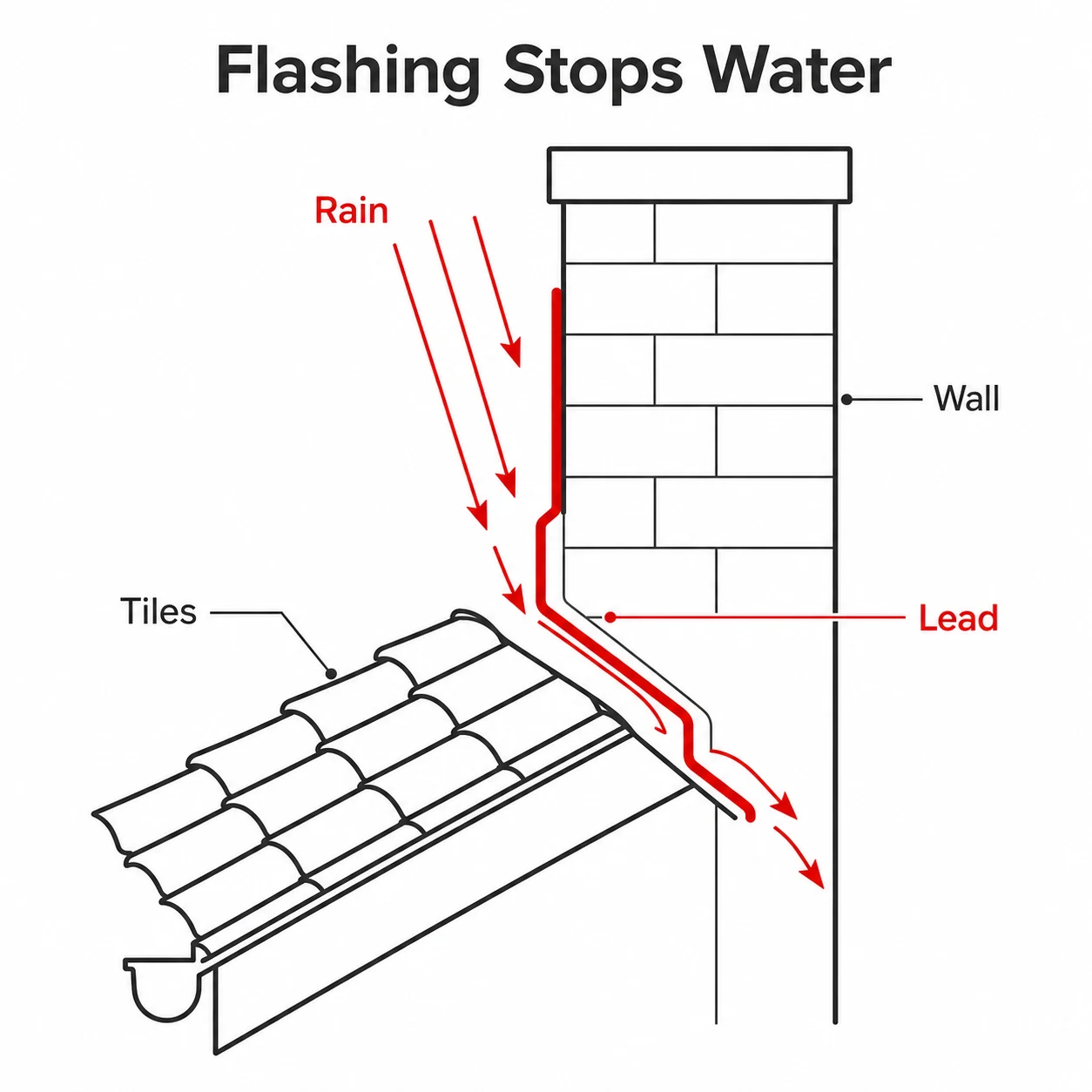
A tiled roof is designed to shed water downwards. Each tile overlaps the next so rain can run from the ridge towards the gutter without getting into the roof space. That simple idea works well across the main slope, but it becomes more complicated wherever the tiles meet something else.
Flashing is used at those junctions because tiles alone cannot form a reliable seal against brickwork, upstands, roof penetrations or changes in direction. Lead is commonly used because it can be shaped into place, dressed neatly to the roof profile and detailed so water is guided back onto the tile surface.
The vulnerable areas are usually the same ones roofers inspect first when a leak is reported. These include chimney abutments, side walls, roof valleys, dormers, roof windows and changes between pitched and flatter sections. Alliance Roofing covers these details as part of its leadwork repair and installation service, where the aim is to protect the junction rather than simply cover the symptom.
Good flashing does not fight the roof design. It works with it. It gives water a clear route away from the joint, allows for sensible movement and sits securely enough to resist normal weather exposure. When any part of that balance is lost, water can begin to find hidden routes beneath the tiles.
How worn lead lets water travel beneath tiles
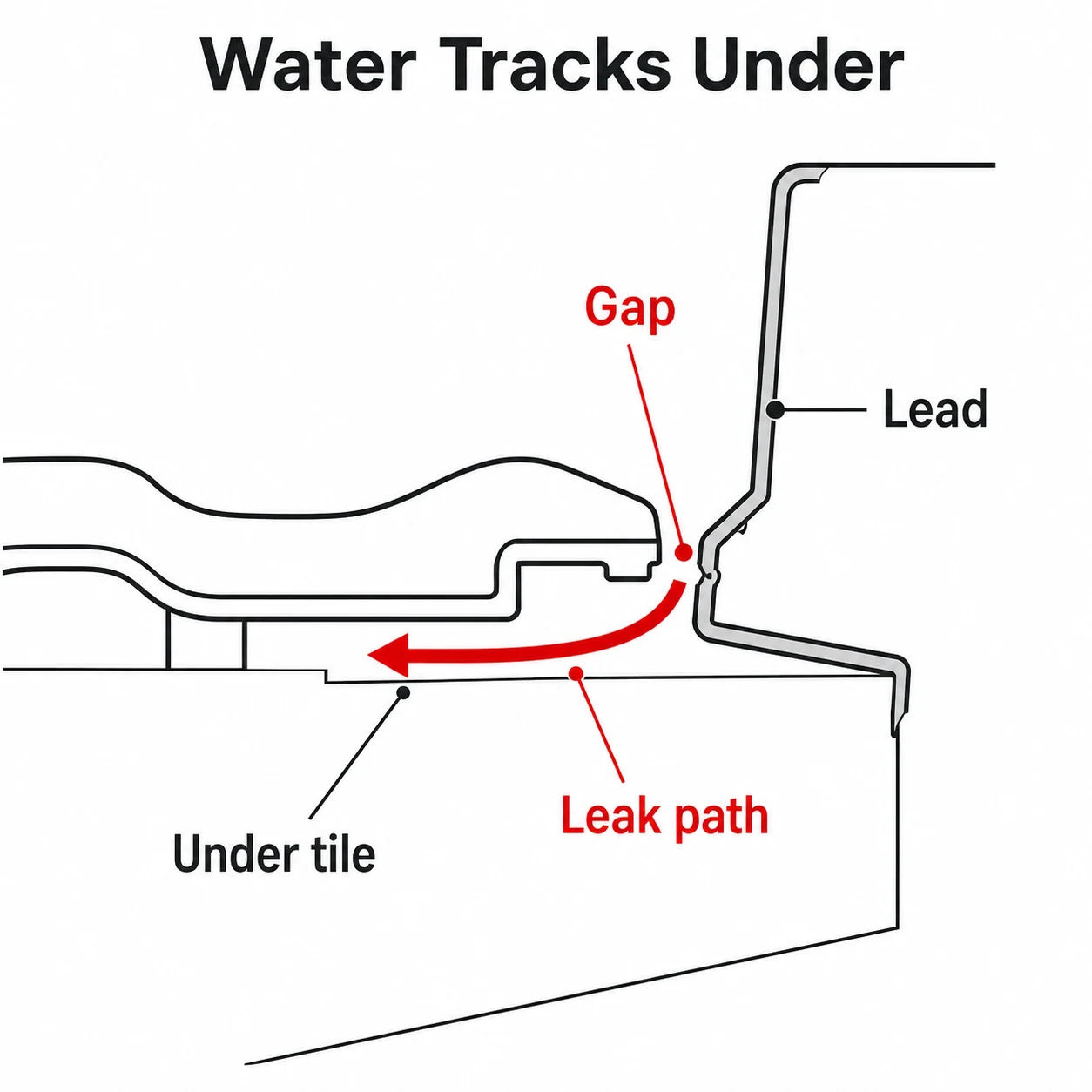
Water rarely needs a large hole to get into a roof. A small split in lead, a lifted edge, a failed mortar joint or a poorly dressed section can be enough. Once rain gets behind the outer surface, gravity, wind pressure and capillary action can carry it further than many property owners expect.
On a pitched tiled roof, water that enters beside flashing may run along the underlay, timber battens or the underside of tiles. It can then appear indoors some distance away from the original defect. This is why a stain near a ceiling line does not always mean the leak is directly above that point.
Wind driven rain makes the problem more noticeable. Rain can be pushed sideways under laps, against vertical surfaces and into small gaps that remain dry in calmer weather. If flashing has lifted from a wall or no longer sits properly into a chase, water can be driven behind it and then track under the tile edge.
Old lead may also suffer from fatigue. Lead expands and contracts as temperatures change. Skilled leadwork allows for that movement through correct sizing, fixing and laps. If a section is too long, fixed too tightly or previously patched without proper detailing, stress can build until cracks form. Once cracked, the lead may still look broadly in place from ground level, but its weathering role has already been weakened.
Debris can add to the issue. Moss, silt and broken mortar can hold moisture around a junction or slow the normal flow of rainwater. When water sits where it should drain freely, small defects in flashing are tested more often and for longer periods.
Common flashing trouble spots
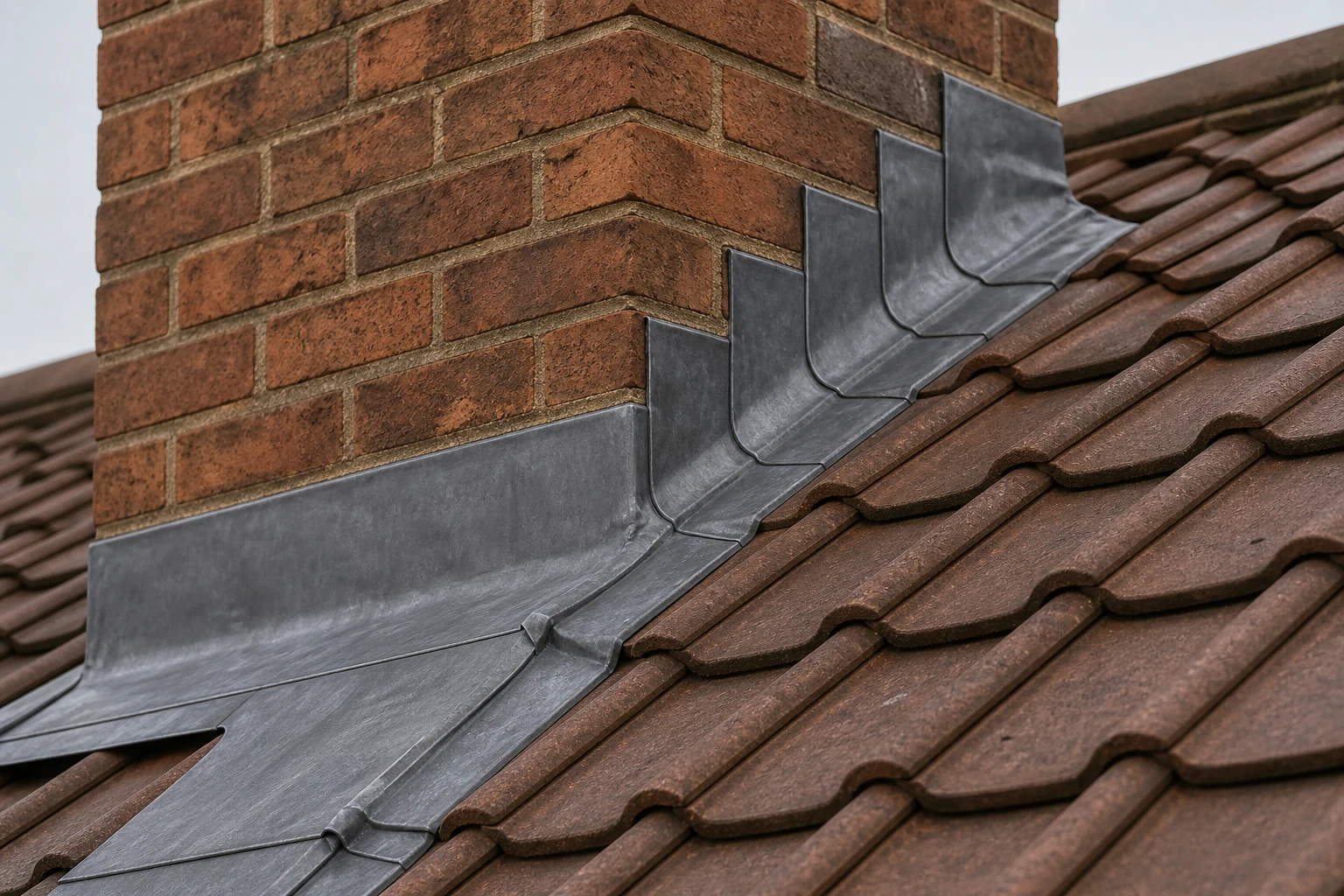
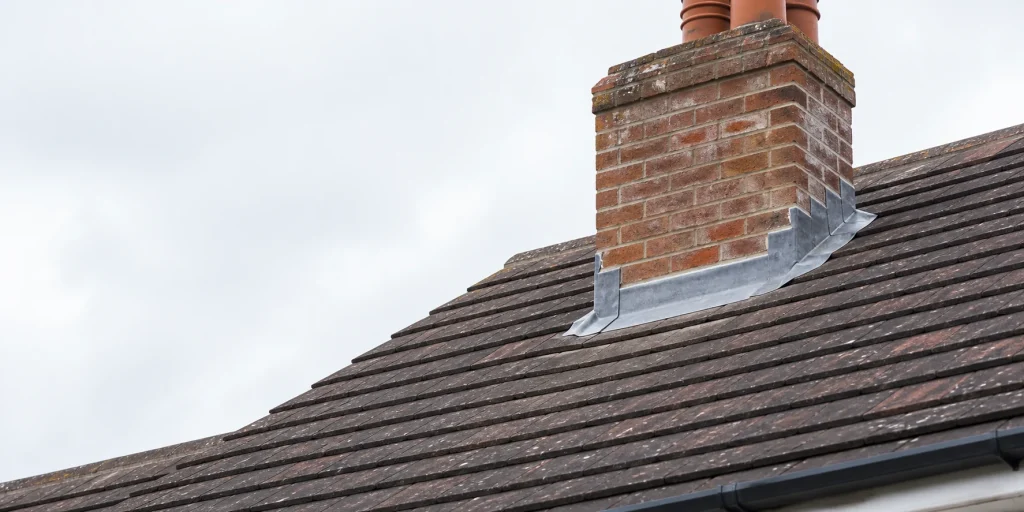
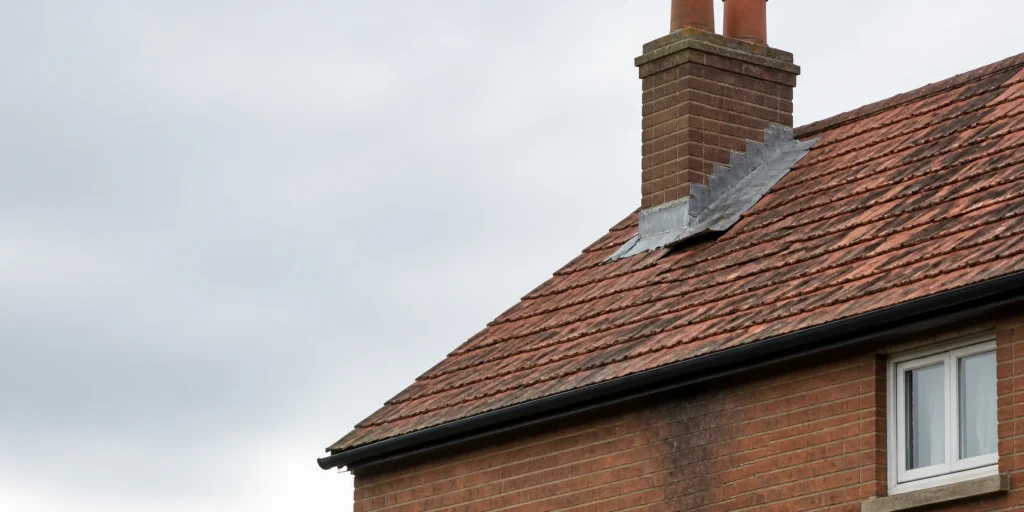
Chimneys are one of the most common places for leadwork problems. They interrupt the roof slope, which means water has to be managed at the front, sides and rear of the stack. Apron flashing, step flashing and back gutters all need to work together. If one part fails, water can move around the masonry and under the neighbouring tiles. Where the stack itself is showing wear, it can also be worth looking at chimney repair and removal options alongside the flashing.
Wall abutments are another high risk area. This is where a tiled roof meets a vertical wall. Lead is usually chased into the wall and dressed over the roof covering. If the chase becomes loose, mortar breaks away or the lead lifts at the edge, rain can slip behind the detail.
Valleys also deserve close attention. A valley collects water from two roof slopes, so it carries more flow than a normal tile run. Lead in a valley must be correctly supported, shaped and lapped. If it splits, blocks or becomes distorted, water can be pushed beneath the surrounding tiles.
Dormers and roof windows create several junctions in a small area. Side cheeks, front aprons and top details all have to direct water cleanly away. A weak point around one edge can lead to staining around reveals, damp plaster or wet insulation.
Roofline details can also play a part. If guttering is blocked, damaged or poorly aligned, water may spill back towards fascia boards or roof edges. That does not replace the need for sound flashing, but it can increase moisture around places that were already vulnerable. In those cases, related soffit, fascia and rainwater goods work may help the roof shed water properly as a whole.
Signs that flashing may be failing
Some flashing defects are visible from a safe vantage point, but many are not easy to assess without proper access. Property owners should avoid climbing onto a roof and should treat any inspection from ladders with caution. Even so, there are warning signs that suggest a professional roof inspection is sensible.
- Damp patches appearing near chimney breasts, upper walls or ceiling edges
- Water marks that become worse after heavy rain or wind driven rain
- Loose mortar around where lead enters a wall
- Lead that appears lifted, rippled, cracked or pulled away from brickwork
- Staining, mould or musty smells in loft spaces
- Broken tiles or slipped tiles beside a junction
- Recurring leaks after small surface patches have been applied
The pattern of the leak matters. A stain that only appears after rain from one direction can point towards wind driven ingress at a junction. Damp that grows slowly may suggest water is being absorbed by surrounding materials before it becomes visible. A sudden drip may follow a split, blockage or storm related tile movement.
A proper roofing inspection looks at the full detail, not just the stain indoors. That includes the condition of the lead, the surrounding tiles, mortar, underlay, battens, guttering and any nearby penetrations. The cause is often a combination of small weaknesses rather than one dramatic failure.
Why skilled leadwork is more than a patch
A quick sealant patch may look reassuring, but it rarely deals with the reason flashing has failed. Leadwork needs to be formed, fixed and lapped in a way that suits the roof detail. The right repair depends on where the water is entering, how the existing lead has been installed and whether the surrounding materials are still sound.
Skilled roofers will consider the direction of water flow, the pitch of the roof, the exposure of the junction and how the lead can move naturally. They may need to remove nearby tiles, clear debris, renew failed mortar, replace split sections or redress lead that has moved out of position. Where the roof covering itself is part of the problem, the repair may need to include tile replacement or correction of the surrounding detail.
There is also a difference between repairing a local defect and renewing leadwork that has reached the end of its useful service life. Minor damage can sometimes be repaired neatly. Wider cracking, poor original detailing or repeated leaks may point towards replacement as the more reliable option.
For a deeper look at roof junctions in general, Alliance Roofing has also explained how leadwork prevents leaks around roof junctions. The key point is simple, lead is not just trim. It is part of the roof weathering system.
What happens during a lead flashing repair
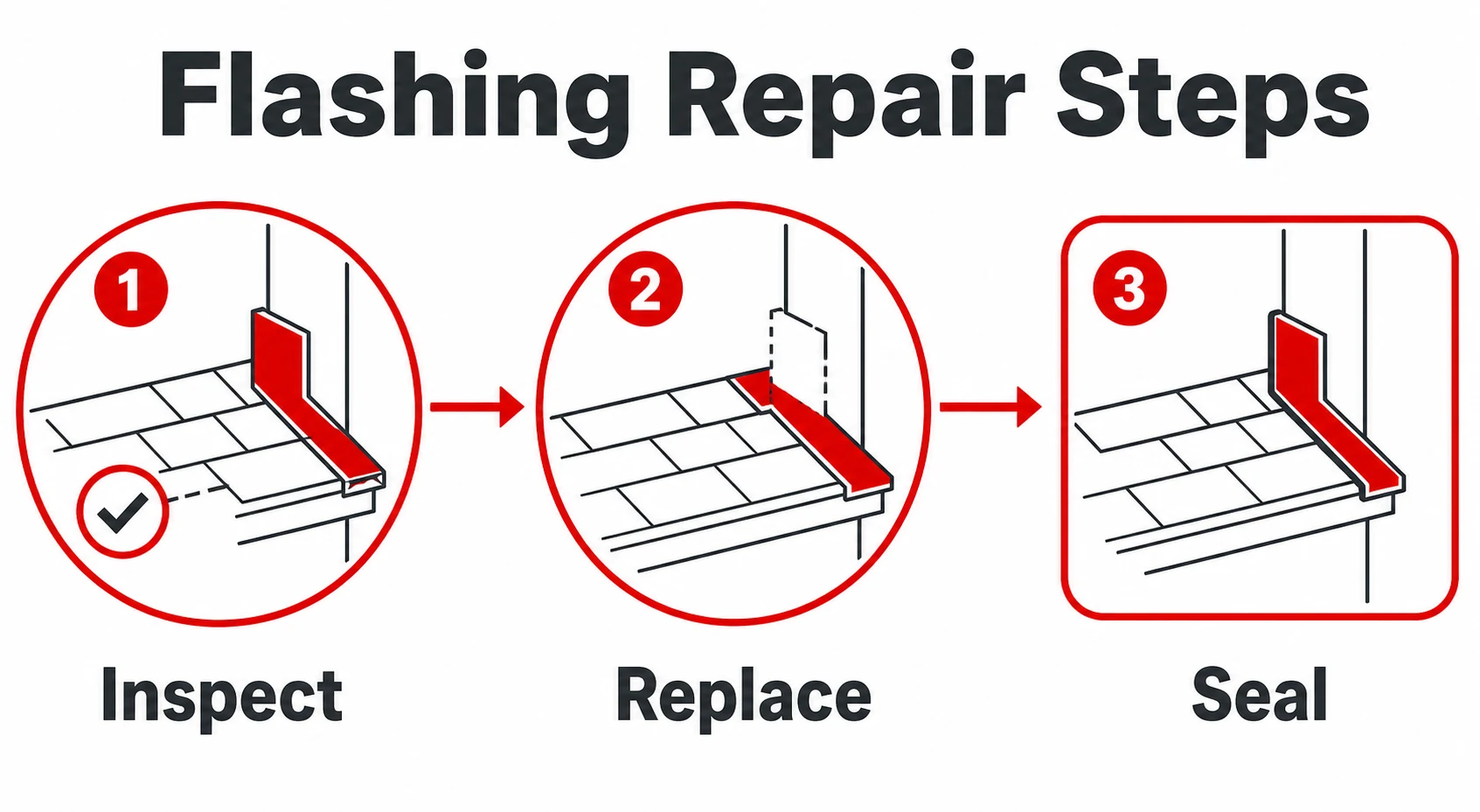
The first step is to understand the leak path. A roofer will usually inspect the external junction, check the condition of adjacent tiles and look for signs of water movement inside the roof space where access is available. This helps separate flashing failure from other issues such as cracked tiles, blocked gutters or condensation.
Once the cause is confirmed, the repair area can be prepared properly. Tiles may need to be lifted so the flashing and underlay can be checked. Old mortar, failed sealant and loose debris are removed so the new or repaired lead can sit against sound material.
If replacement lead is needed, it should be cut and dressed to suit the detail. Correct laps, fixings and support are important because they help the lead stay watertight while still allowing natural movement. The surrounding tiles are then reinstated so water can flow back over the roof surface and into the guttering as intended.
Finally, the finished work should be checked as part of the wider roof area. A good repair is not only about stopping the immediate drip. It is about restoring the route that rainwater should have taken in the first place.
- Lead flashing protects the junctions where tiles meet walls, chimneys, valleys, dormers and other roof details.
- Small cracks, lifted edges or failed mortar can let rain travel under tiles before a leak appears indoors.
- The visible damp patch is not always directly below the original defect because water can track along hidden surfaces.
- Skilled leadwork repairs address the shape, laps, fixings and surrounding roof materials, not just the surface symptom.
- Early inspection helps prevent repeated leaks and protects the wider tiled roof area.
Frequently asked questions
Can worn lead flashing cause a leak even if the tiles look intact?
Yes. The tiles may still be in good condition, but water can enter where the flashing meets a wall, chimney, valley or roof feature. The junction needs its own weatherproof detail.
Is cracked lead always visible from the ground?
No. Some cracks, lifted laps and loose chases are hard to see without safe access. Indoor staining or damp in the loft may be the first clear warning sign.
Can lead flashing be repaired instead of replaced?
Sometimes. Small local defects may be repairable, but widespread splitting, poor detailing or repeated leaks can mean replacement is the better route for a dependable seal.
Why does a leak appear away from the flashing defect?
Once water gets beneath the roof covering, it can run along tiles, underlay, battens or internal surfaces before it finds a place to show indoors.
Need help with worn lead flashing?
If you are dealing with damp patches, suspected roof leaks or ageing flashing around a tiled roof junction, Alliance Roofing can inspect the detail and advise on a practical repair.