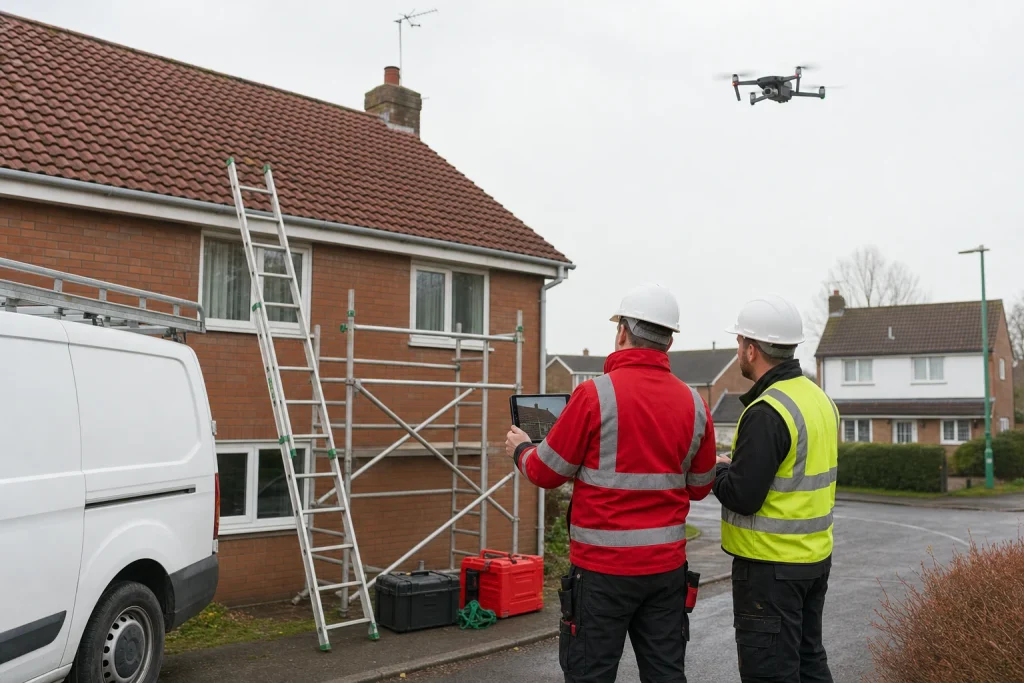
Some roof problems are easy to spot from the ground. Others sit high up, behind chimney stacks, around dormers or on flat roof areas where a ladder view only tells part of the story.
A drone roof survey gives a clearer look at difficult-to-access areas, helping identify visible damage safely and decide what should happen next.
What a drone survey adds to a roof inspection
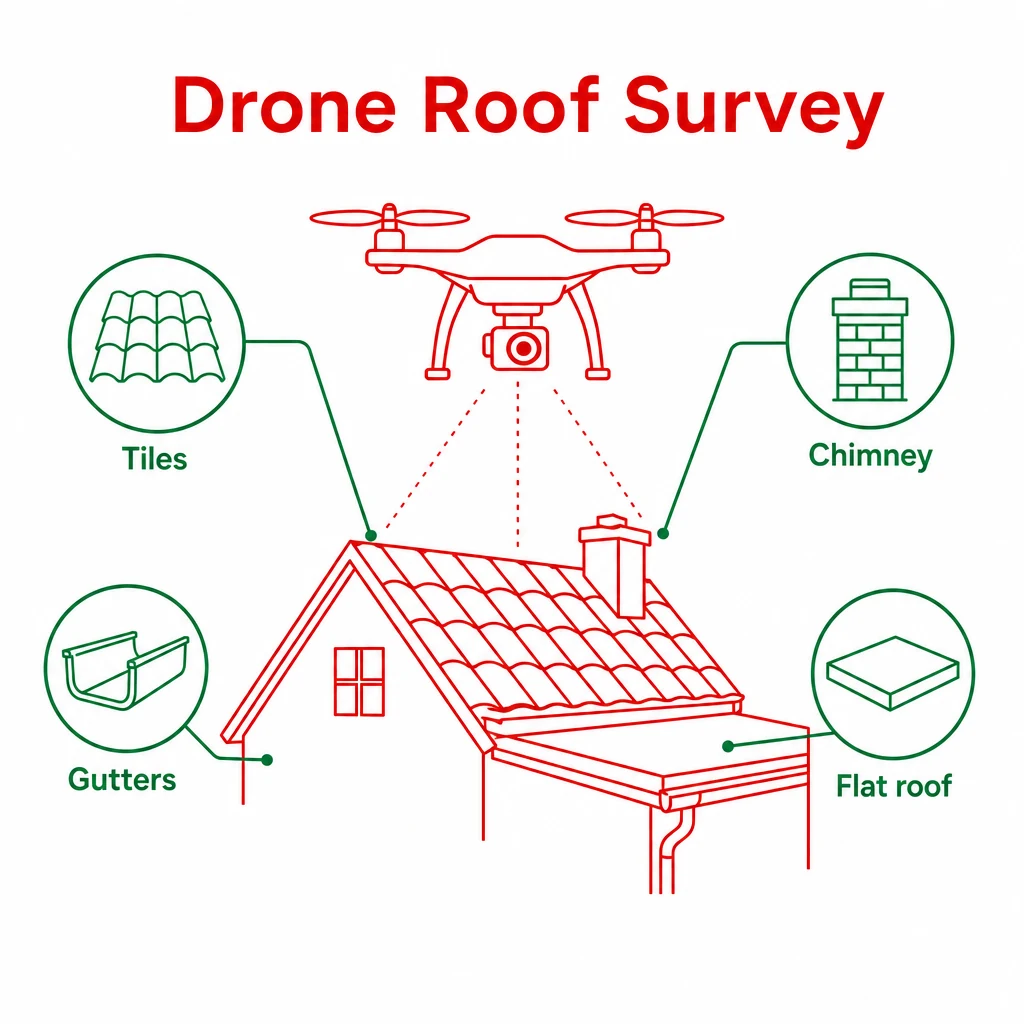
A drone does not replace roofing knowledge; it gives that knowledge better visibility. High-level photographs and video can show areas that are hidden from the pavement, such as rear slopes, awkward valleys, parapets, rooflights, roofline details and chimney junctions.
For many homes and small commercial buildings, a drone roof survey is a practical first step when there are signs of damage but no obvious source from ground level. It can help confirm whether a problem looks localised, whether several areas are affected, or whether a closer hands-on inspection is needed.
The main advantage is perspective. A roofer can review the condition of the roof covering, edges, flashings and drainage routes without relying on guesswork from below.
Visible damage on pitched tiled roofs
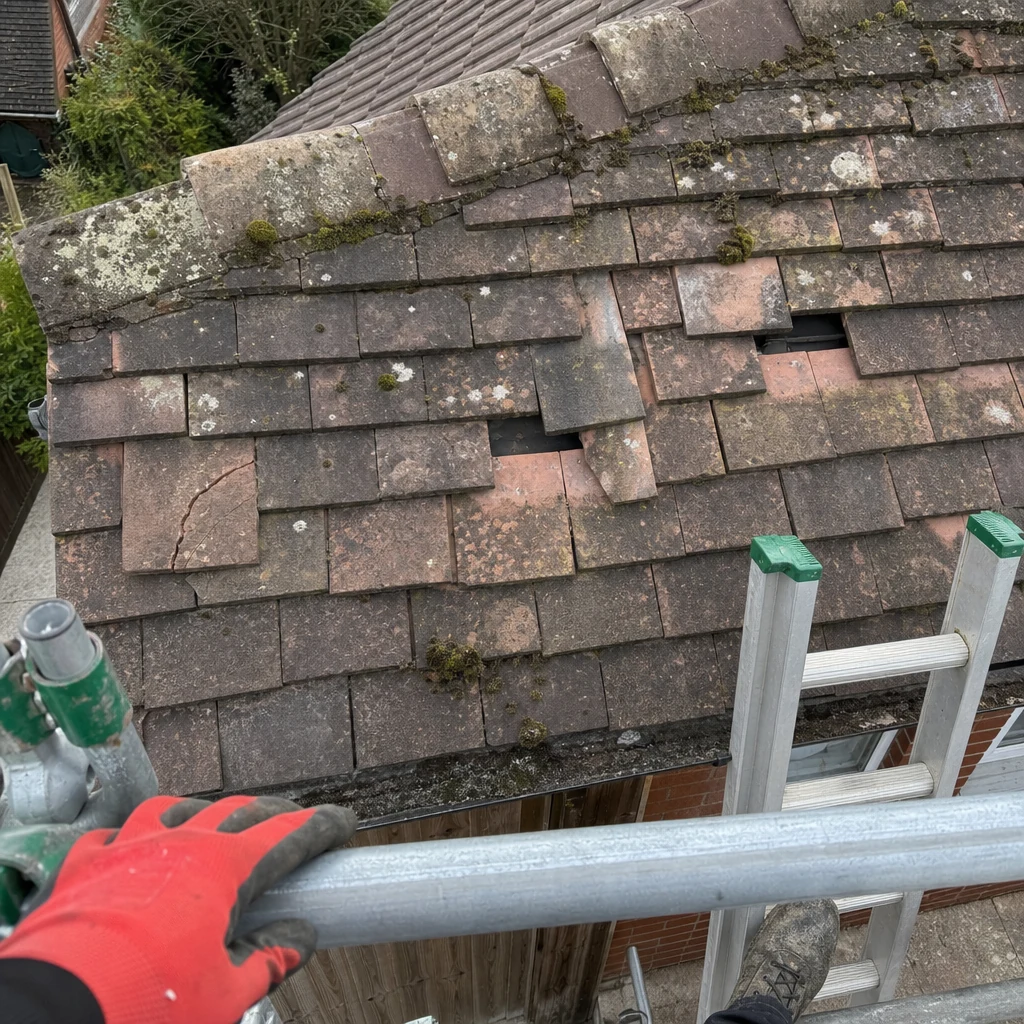
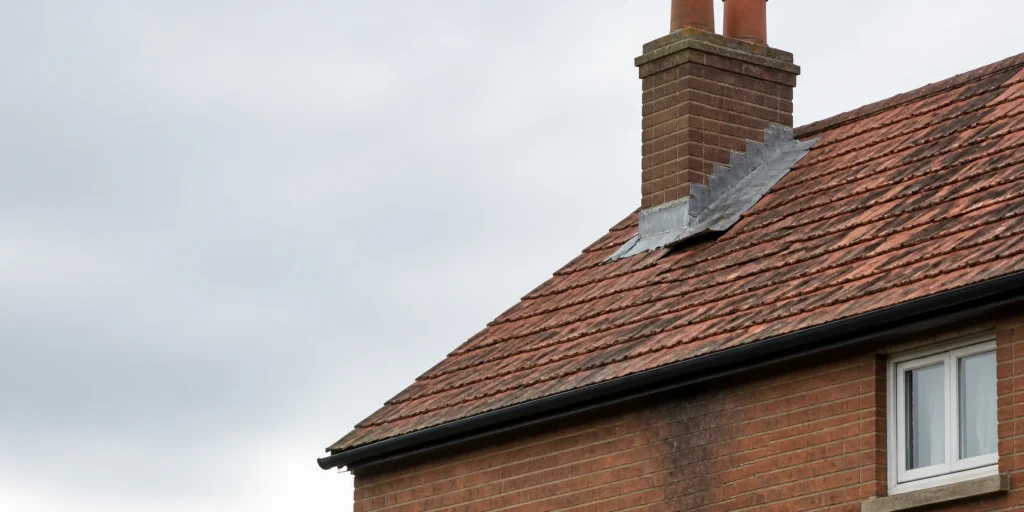
On pitched roofs, drone footage can reveal common visible defects that may allow rainwater beneath the roof covering. These include slipped tiles, cracked tiles, missing ridge pieces, displaced hip tiles, broken mortar, open gaps at verges and areas where the roof line appears uneven.
It can also show whether damage is isolated or part of wider wear. For example, one slipped tile may be a straightforward repair, while repeated movement across a slope could point to fixing issues, ageing battens or storm exposure. A drone view can also highlight moss build-up, debris sitting in valleys and signs that water is not draining cleanly.
If the survey suggests more than a small repair, the next step may be a closer assessment of the roof structure and coverings. Where a roof is nearing the end of its serviceable life, it may lead to advice on pitched roof work rather than repeated patch repairs.
Flat roofs, dormers and roofline details
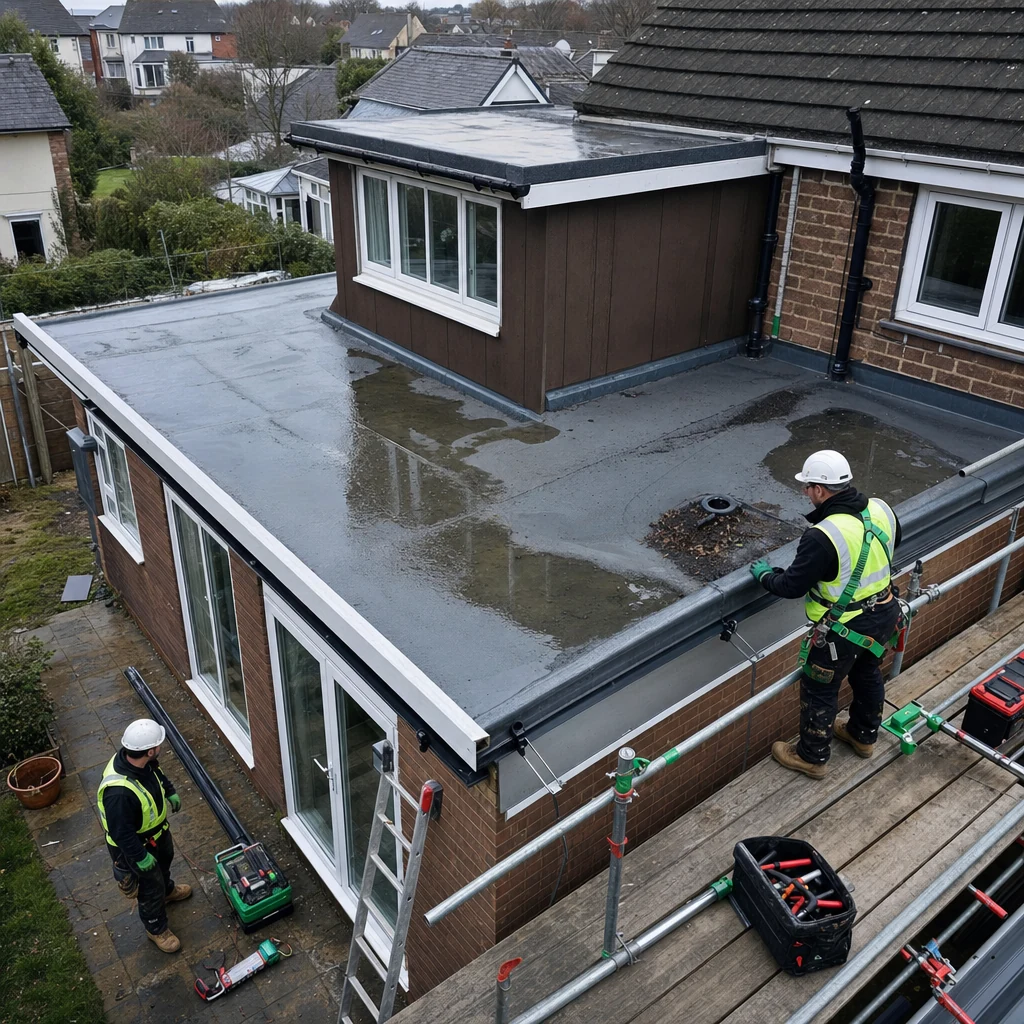
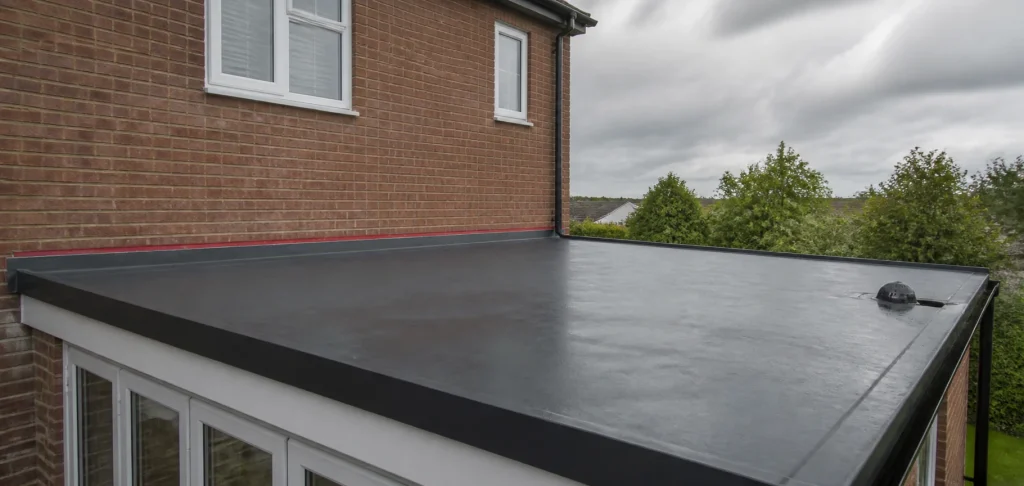
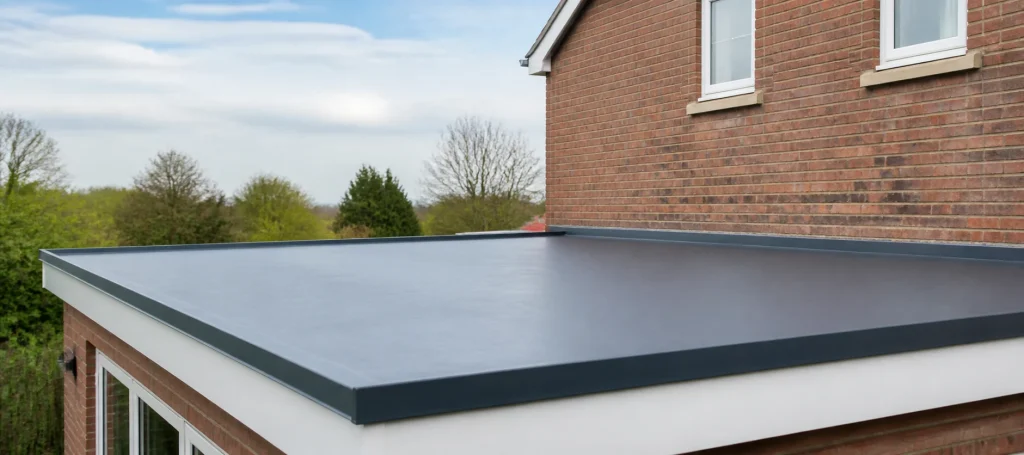
Flat roofs benefit from an overhead view because many problems sit on the surface. A drone can show ponding water, splits, blistering, lifted edges, damaged trims, blocked outlets and debris around rooflights. It can also identify where adjoining walls, upstands or parapets may be vulnerable.
For homes with extensions, garages or commercial flat roof sections, this can help decide whether a local repair is suitable or whether the covering needs more detailed attention. If the surface appears aged or repeatedly patched, information from the survey may support a discussion about flat rubber roofs or, in some cases, a flat to pitched roof conversion.
Dormers are another area where drone visibility is useful. Cheeks, small flat tops, flashings and gutter edges can be hard to inspect from the ground, so clear images can help assess dormer roof details before access is arranged.
Chimneys, leadwork and awkward junctions
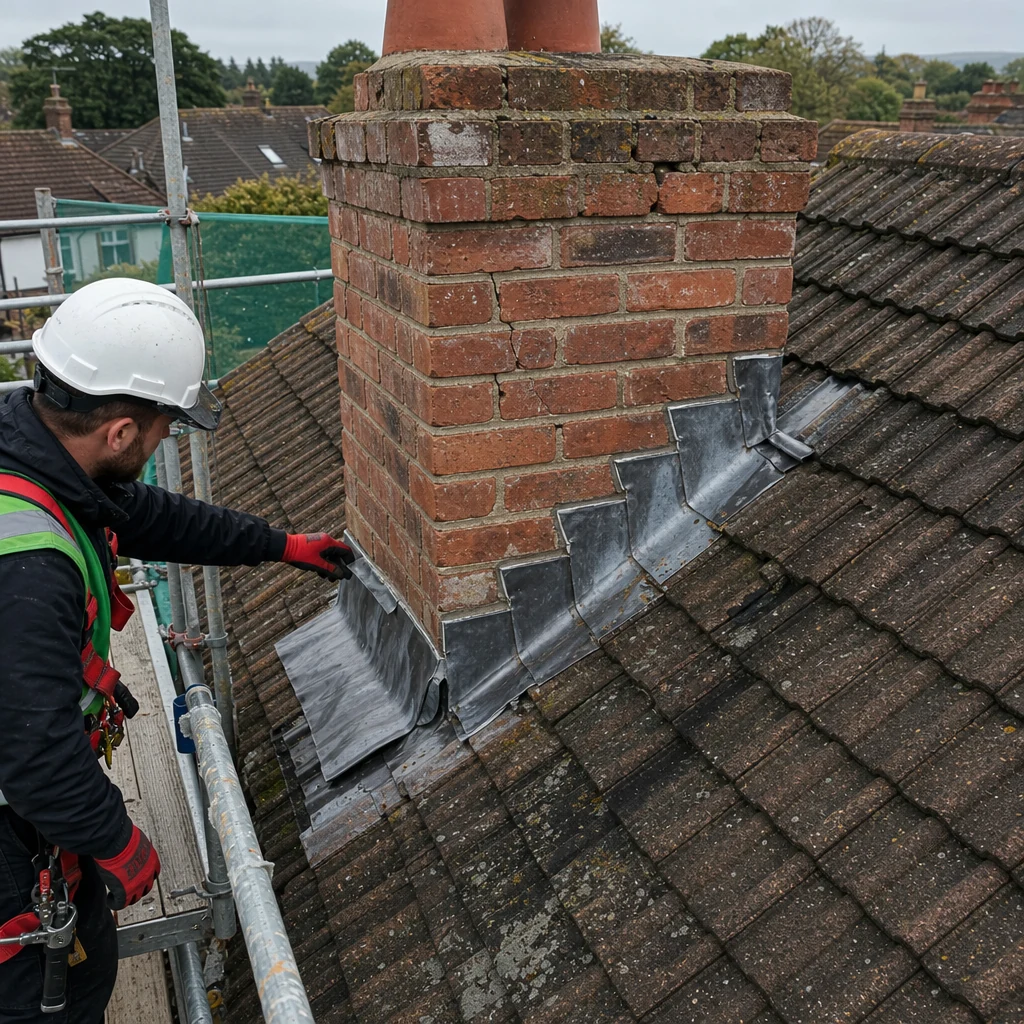
Chimneys and roof junctions are frequent sources of visible defects. A drone survey can show cracked flaunching, loose pots, open mortar joints, vegetation growth, staining below the stack and damaged flashing. These signs do not always prove the source of a leak, but they do show where attention may be needed.
Leadwork is especially important around chimneys, valleys, abutments and dormers. From above, it may be possible to spot lifted edges, splits, poor overlaps or areas where previous repairs have failed. Where these details look compromised, the findings may lead to specialist leadwork repairs or closer inspection at roof level.
If a stack appears unstable, weathered or no longer needed, drone images can also support an informed discussion about chimney repairs or removal.
When the survey leads to repair or further inspection
A drone survey is most useful when it turns visible evidence into a clear next step. Some findings are straightforward: a missing tile, a blocked gutter outlet or a lifted trim may lead directly to a planned repair. Other findings need further investigation, especially where the roof covering must be lifted, timbers checked or moisture tracked inside the building.
Weather, light and roof layout can affect what is visible, so a responsible report should explain any limitations. A drone cannot feel whether felt is brittle, test fixings by hand or inspect hidden layers beneath the surface. It can, however, narrow down the likely issue and help avoid unnecessary disturbance.
The best outcome is practical clarity: what looks sound, what needs repair, what should be monitored and what requires safe access for a closer look.
- A drone survey helps inspect high, steep or awkward roof areas from a clearer viewpoint.
- It can reveal visible issues such as slipped tiles, damaged leadwork, flat roof defects and chimney wear.
- Drone findings can guide repairs, monitoring or a hands-on inspection where hidden damage is possible.
- It is especially useful when the source of a leak is not obvious from ground level.
Frequently asked questions
Can a drone survey replace a roofer going onto the roof?
Not always. It is excellent for visual inspection and planning, but some issues need hands-on checks, lifting of materials or internal investigation before repair decisions are final.
Will a drone survey show the exact source of a leak?
It can often show likely entry points, such as damaged tiles, failed flashing or flat roof splits. Water can travel inside a roof, so further inspection may still be needed.
What types of roof are suitable for drone inspection?
Drones are useful for pitched roofs, flat roofs, dormers, chimneys, extensions and small commercial roofs, provided the survey can be carried out safely and legally.
What happens after visible damage is found?
The images are reviewed, the likely causes are explained and the next step is recommended. This may be a targeted repair, monitoring, or closer access for confirmation.
Need a clearer view of your roof?
If you have concerns about damage, leaks or hard-to-reach roof areas, Alliance Roofing can help you understand what is visible and what to do next.