Most roof leaks do not begin in the middle of a plain run of tiles. They usually start where one part of the roof meets another, where water is interrupted, slowed down or forced to change direction.
That is where leadwork matters. Correctly fitted lead flashing helps guide rainwater away from vulnerable junctions before it can track beneath tiles, soak into timbers or leave damp marks inside the building.
Why roof junctions are so vulnerable
A roof is designed to shed water quickly. On a simple slope, rain runs down the tiles or slates and into the gutter. Problems are more likely where that smooth path is broken by a wall, chimney, valley, roof edge, dormer, flat roof upstand or change in level.
At these points, water can sit for longer, be pushed sideways by wind or find small gaps that are not obvious from the ground. A tiny opening around a junction can let water travel surprisingly far before it becomes visible indoors. The damp patch on a ceiling is not always directly below the fault outside.
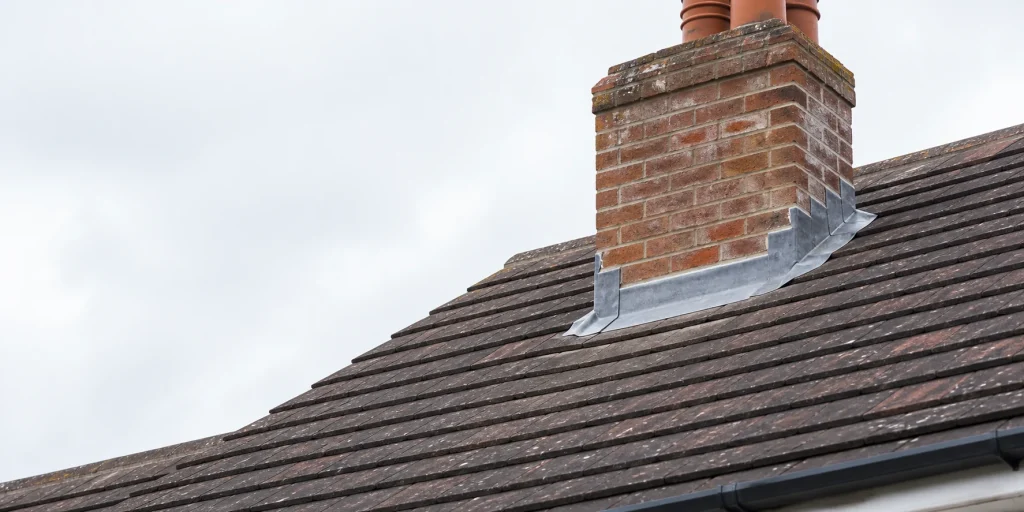
Lead flashing protects these weak points by forming a weathering layer over the joint. Instead of relying only on mortar, sealant or tight tile cuts, the lead creates a shaped barrier that directs water back onto the roof covering and towards the drainage route.
Good roof leadwork is not just about covering a gap. It has to be dressed, lapped, fixed and finished in a way that suits the junction, the roof pitch and the direction water will naturally take.
Where lead flashing is commonly used
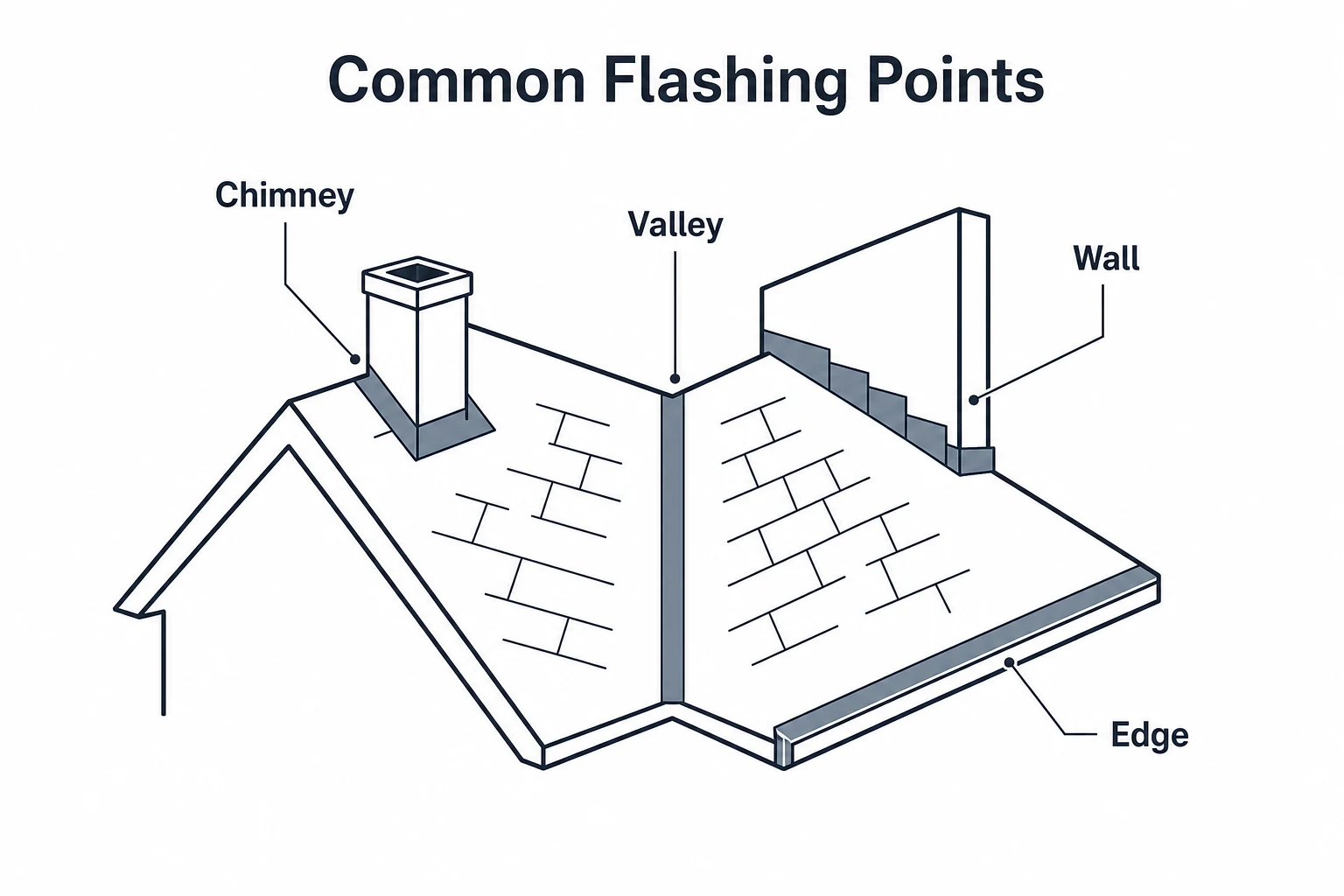
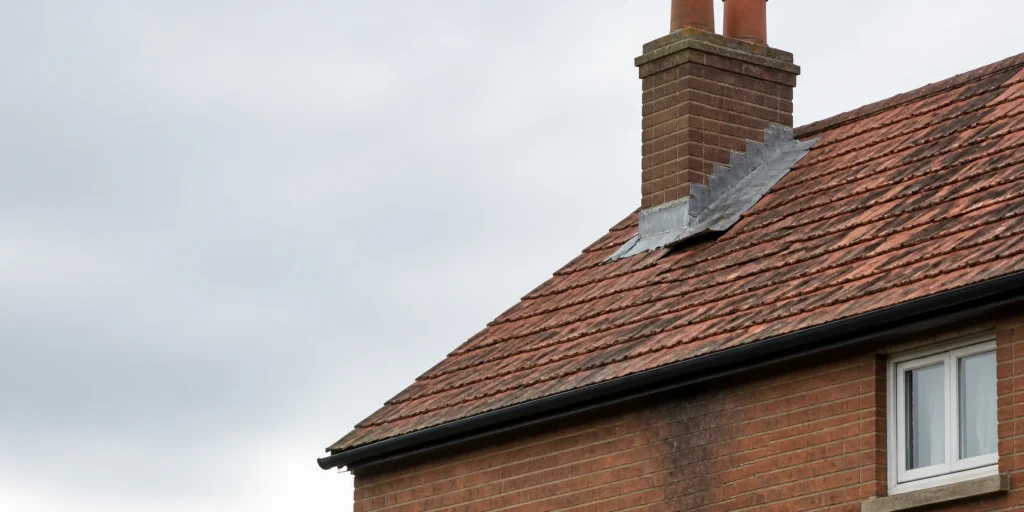
Leadwork appears in several important places on a roof. Around a chimney, stepped flashing is often used where the roof covering meets the brickwork. Apron flashing may be fitted at the front, with back gutters or soakers used where needed to help water escape cleanly.
Against walls, lead flashing helps protect the line where a pitched roof abuts masonry. This is common on extensions, lean to roofs and roof sections that return into a higher wall. Without reliable flashing, wind driven rain can work behind the tiles and into the roof structure.
Valleys also need careful weathering. A valley carries a lot of water because it collects rain from two roof slopes at once. The materials in the valley must allow water to move freely without catching debris or forcing water under the adjoining tiles.
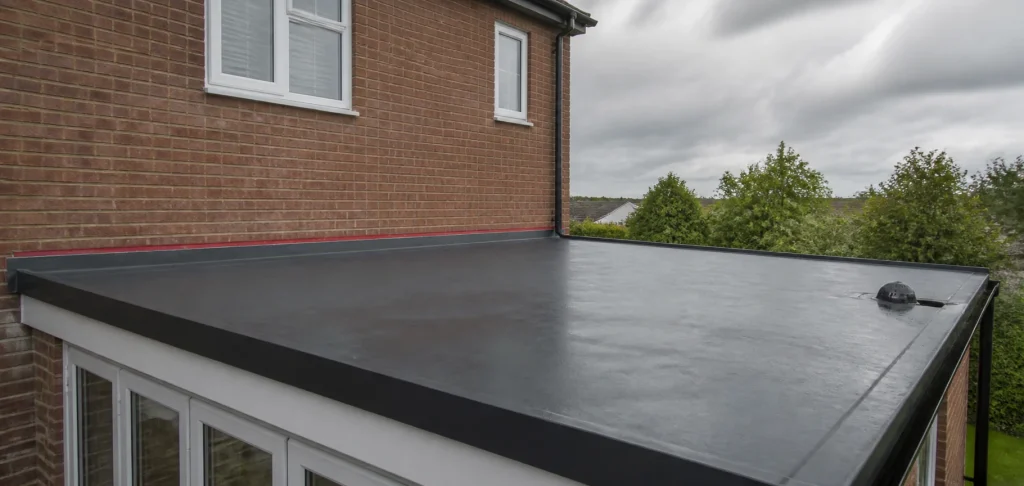
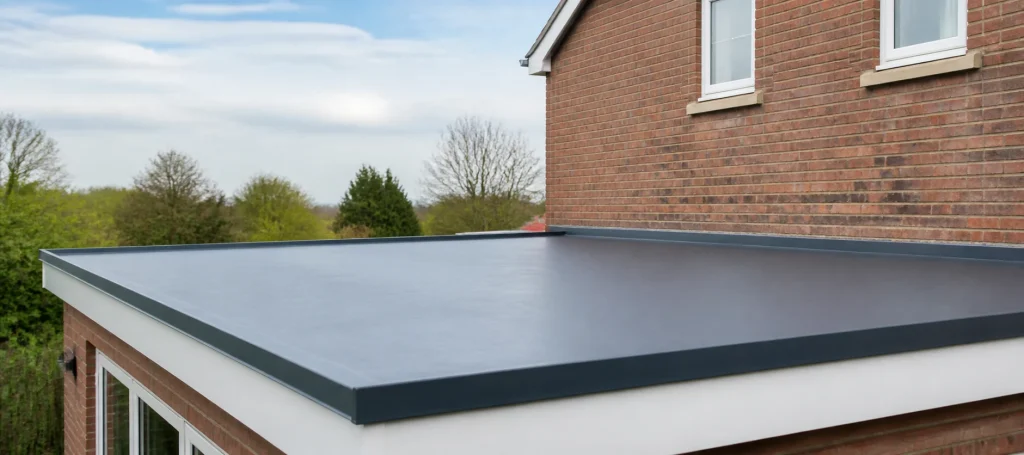
Lead can also be used at roof edges, changes in roof level and some junctions between pitched and flat roof areas. On older properties, lead may be found in places where modern systems are now sometimes used, but the principle remains the same. The detail must guide water away from the vulnerable joint.
Where a chimney is involved, the condition of the masonry matters too. Cracked mortar, loose flaunching or movement in the stack can affect the flashing around it, so it may be sensible to consider chimney repair work at the same time as any lead replacement.
How good installation helps stop water tracking in
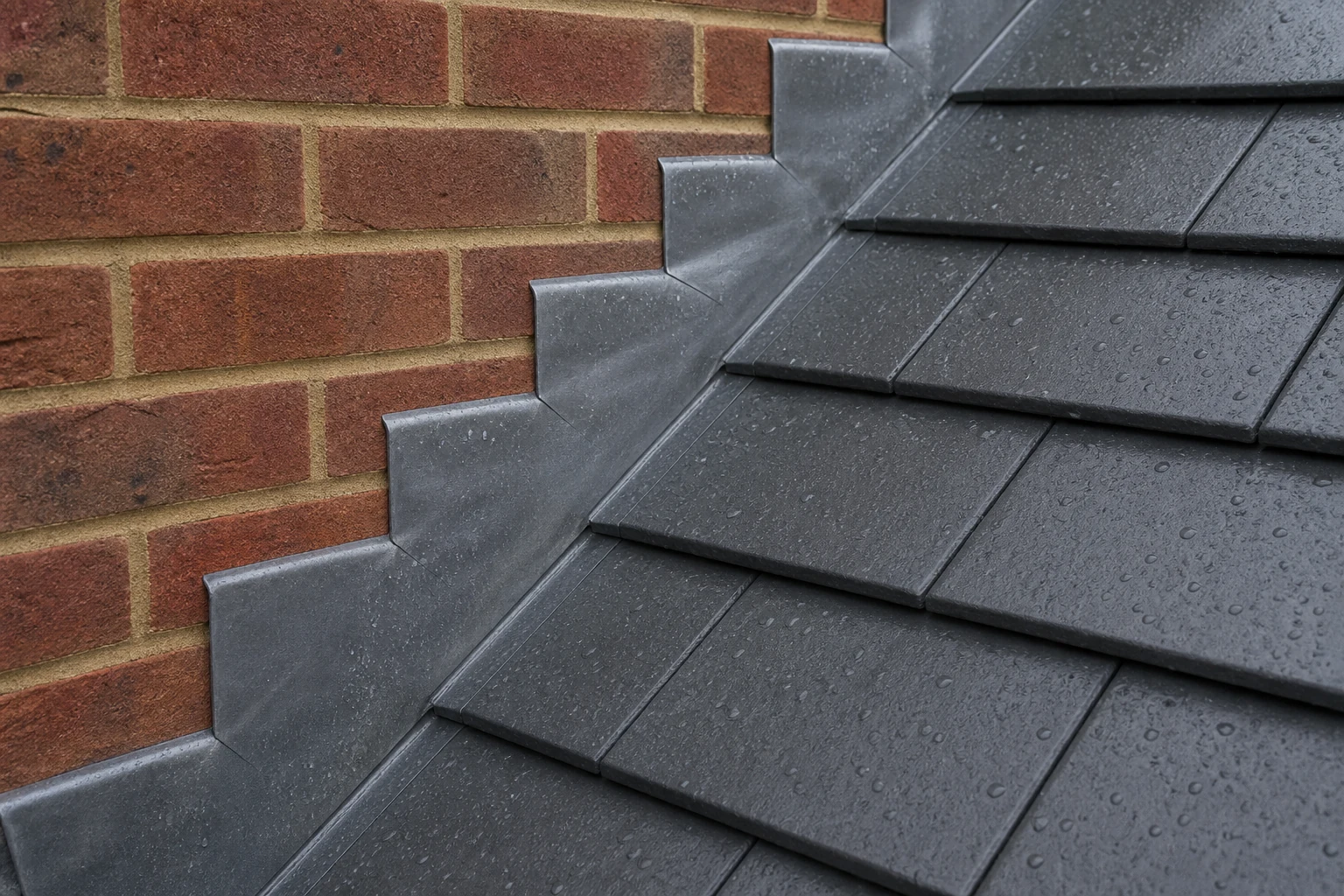
Lead is flexible, durable and well suited to complicated roof details, but it still has to be fitted correctly. The quality of the installation is what turns the material into a reliable weatherproofing detail.
One key principle is overlap. Flashing must be lapped so that water always runs over the next piece, not behind it. If the laps are too short, poorly placed or facing the wrong way, water can be driven into the joint during heavy rain.
Another important detail is how the lead is fixed into masonry. Flashing is normally chased into a joint or groove, secured, then finished with a suitable pointing or seal. If it is only surface fixed or the joint breaks down, water can creep behind it.
Lead also needs room to move. Roofs expand and contract with temperature changes, and leadwork should be installed in suitable lengths with the correct detailing for movement. Oversized pieces, tight fixing or poor dressing can lead to splitting or lifting over time.
The surrounding roof covering must be sound as well. Tiles, slates, battens, underlay and roofline details all work together. If a tile is cracked or a gutter is overflowing, even well fitted flashing may be put under pressure. That is why a proper inspection looks at the whole junction, not just the visible strip of lead.
Signs leadwork may be causing a leak
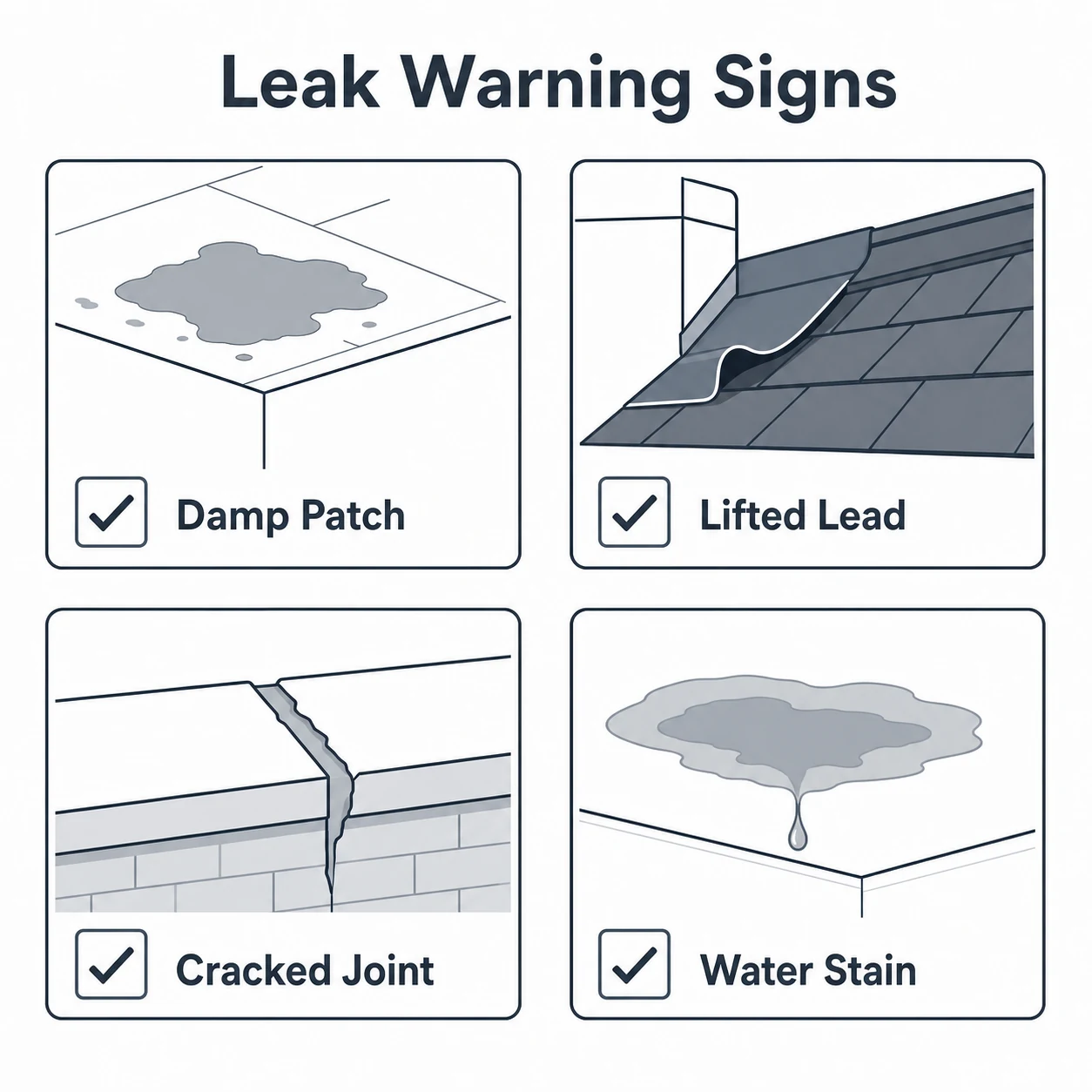
Some leadwork problems are visible from outside, especially if the flashing has lifted, slipped, split or pulled away from a wall. You might also notice gaps in the pointing above the lead, cracked mortar around a chimney or staining on nearby masonry.
Inside the building, warning signs can include damp patches near chimney breasts, staining where an extension roof meets a wall, peeling paint, musty smells or plaster that feels soft after rain. These symptoms can appear after prolonged wet weather or when rain is combined with strong wind.
It is worth acting early. Water that enters around a junction can soak insulation, affect roof timbers and damage ceilings before it becomes obvious. A small flashing repair can prevent a much wider roof repair later.
That said, not every leak near a junction is caused by the lead itself. Blocked gutters, cracked tiles, failed mortar, damaged underlay or poor previous repairs can create similar symptoms. If water is backing up at the roof edge, the issue may be linked to the roofline, so soffits, fascias and rainwater goods may need checking alongside the roof covering.
Repair, replacement and inspection options
The right solution depends on the condition of the existing leadwork and the cause of the leak. If the lead is generally sound but the pointing has failed, renewing the joint may be enough. If the flashing has split, lifted badly or been poorly fitted, replacement is often the more reliable option.
Temporary sealing products can look appealing when water is coming in, but they should not be treated as a proper substitute for correct flashing work. Sealants can fail, trap moisture or make later repairs more awkward. A lasting repair usually means dealing with the detail itself.
A roofer will normally inspect the junction, check the laps and fixings, look at the surrounding roof covering and consider how water is moving across the area. On a chimney, they may check the brickwork, pointing and top of the stack. On a valley, they may look for debris, tile movement and signs that water is being restricted.
After severe weather, it is sensible to keep an eye on vulnerable roof areas, especially if there has been strong wind or driving rain. For practical first steps while waiting for help, Alliance Roofing also has guidance on emergency roof repairs after storms.
Leadwork is a skilled part of roofing because small details make a real difference. When it is installed neatly and matched to the roof, it quietly does its job every time it rains.
- Lead flashing protects the weak points where roof surfaces meet walls, chimneys, valleys, edges and changes in level.
- Leaks often start at junctions because water slows down, changes direction or is driven sideways by wind.
- Good leadwork relies on correct laps, secure fixing, careful dressing and allowance for natural movement.
- Damp near a chimney, wall abutment or roof edge should be inspected early before water spreads into the structure.
- The surrounding roof covering, guttering and masonry should be checked as part of any leadwork repair.
Frequently asked questions
What is lead flashing on a roof?
Lead flashing is a shaped piece of lead used to weatherproof a roof junction. It helps direct rainwater away from gaps where tiles, walls, chimneys or other roof sections meet.
Can damaged leadwork cause an internal leak?
Yes. If flashing lifts, splits, slips or pulls away from masonry, water can get behind the roof covering and track into the structure. The visible damp patch may appear some distance from the outside fault.
Does all old lead flashing need replacing?
Not always. Some older leadwork remains sound and only needs local repair or repointing around it. Replacement is usually considered when the lead is split, badly fitted, loose or no longer weathering the junction properly.
Why should a roofer inspect more than the flashing?
Because similar leaks can be caused by cracked tiles, blocked gutters, damaged mortar, poor underlay or roof movement. Checking the full junction helps identify the real cause rather than treating only the symptom.
Need help with a roof junction leak?
If you have damp near a chimney, wall, valley or roof edge, Alliance Roofing can inspect the junction and advise on the right leadwork repair.